
Palo Alto homeowners keep asking the same question: is ADU rental income Palo Alto builders promise actually worth it, or is building one just to rent it out a hassle in disguise? The honest answer is yes, in most cases, with typical rents landing between $3,200 and $5,500 a month for a well-located, well-built unit. That figure runs higher than almost anywhere else in the Bay Area because of the city’s job density and chronic housing shortage. This guide breaks down real numbers by neighborhood and unit type, the owner-occupancy rules that affect your strategy, and how to avoid the mistakes that quietly eat into your return. If you want a head start, you can get a free estimate from a licensed Palo Alto ADU builder before you commit to a design.
How Much Rental Income Can an ADU Generate in Palo Alto?
In Palo Alto, a typical ADU rents for $3,200–$5,500 per month, with the exact number driven by square footage, layout, and neighborhood. A studio or one-bedroom unit under 600 sq ft tends to land at the lower end, while a two-bedroom detached unit near Downtown or California Avenue can push past $5,000.
Palo Alto’s rental market doesn’t behave like the rest of the Bay Area. Tenants here are largely tech employees, grad students, and postdocs who need furnished or semi-furnished space close to work, and they’re willing to pay for it. A 450 sq ft studio ADU rents differently than a 750 sq ft two-bedroom, so size and layout matter more here than in almost any other market.
| ADU Size / Type | Typical Monthly Rent | Typical Tenant |
|---|---|---|
| Studio, 350–500 sq ft | $3,200–$3,800 | Single professional, grad student |
| One-bedroom, 500–650 sq ft | $3,600–$4,400 | Couple, remote worker |
| Two-bedroom, 700–850 sq ft | $4,300–$5,500 | Small family, roommates |
A homeowner in the Midtown neighborhood recently completed an 800 sq ft detached two-bedroom ADU for roughly $385,000 and now rents it for $4,900 a month to a Stanford postdoc couple. That’s a gross annual yield near 15% of construction cost, well above what most homeowners expect going in.
Is an ADU a Good Investment in Palo Alto Right Now?
Yes. In Palo Alto, ADUs currently generate gross annual rental yields of 6–9% on construction cost, and often higher when the unit is detached and near a job corridor. That’s a return most other home improvement projects simply can’t match.
Compare that to a kitchen remodel, which improves resale value but generates zero monthly income, or a room addition, which adds livable space but doesn’t create a separate rentable unit. An ADU is different: it’s the only home project in Palo Alto that pays you back every single month.
Construction costs here run $350,000–$550,000 for a detached unit depending on finishes, foundation type, and utility connections. At $4,500 a month in rent, that’s roughly $54,000 a year in gross income, before accounting for vacancy, maintenance, and property tax reassessment. Even after those costs, most owners net a payback period of 8–12 years, which is fast for a real estate investment that also adds long-term value to the property itself.
The honest caveat: an ADU built purely to chase rental income without a clear tenant plan can sit vacant for months. Interview your builder about realistic timelines and get their read on current rental demand in your specific neighborhood before you finalize the floor plan.
Detached ADU vs. Attached ADU: Which Rents for More in Palo Alto?
Detached ADUs in Palo Alto rent for 10–20% more than comparable attached units, mainly because tenants pay a premium for privacy and separate entry. A detached unit behind the main house feels like its own home; an attached unit, even with a private entrance, still feels connected to the owner’s.
This matters more in Palo Alto than in cheaper rental markets, because tenants here have options and they’re comparing your unit to dozens of similar listings within a few miles.
| Feature | Detached ADU | Attached ADU |
|---|---|---|
| Average rent (2BR, ~750 sq ft) | $5,000–$5,500 | $4,200–$4,700 |
| Tenant privacy | High, separate structure | Moderate, shares a wall |
| Construction cost | $350,000–$550,000 | $220,000–$350,000 |
| Best lot fit | Larger backyards, R-1 lots | Smaller lots, existing footprint |
So which one should you build? If your lot has the room, a detached unit almost always wins on rental income and long-term flexibility, including the option to sell the property with the ADU as a standalone rental asset. If your lot is tight, an attached ADU still performs well, just don’t expect it to hit the top of the rent range. Our ADU cost breakdown by Palo Alto neighborhood goes deeper into how lot size and zoning affect what you can actually build.
Why Palo Alto’s Job Market Keeps ADU Rental Demand High
ADU rental income in Palo Alto stays strong because the city sits at the center of one of the tightest job markets in the country. Stanford University, Stanford Research Park, and nearby corporate campuses generate constant demand for housing that a limited apartment supply can’t absorb.
Palo Alto’s housing stock skews toward single-family homes, not high-density rentals, which means the apartment vacancy rate stays low and rents stay high. An ADU fills a gap the local market genuinely needs: smaller, well-located units for single professionals, couples, and visiting researchers who don’t want or can’t afford a full house.
This is different from renting out a spare room in a suburb with a soft job market. Here, your tenant pool includes engineers relocating for a new role, postdocs on 1-2 year appointments, and remote workers who want to be near Stanford but don’t need a full house. That demand doesn’t disappear during a slow economic quarter the way it might in a market driven by one employer.
Honestly, this is the single biggest reason ADU rental income in Palo Alto outperforms nearby cities with lower land values but weaker job anchors. You’re not just renting square footage, you’re renting proximity to some of the highest-paying jobs in the country.
How Do Owner-Occupancy Rules Affect Your Long-Term Rental Strategy?
State law no longer requires owner-occupancy for ADUs built before 2025, but that exemption is set to expire for many new permits, so you need to check current rules before you plan a long-term rental strategy around a non-owner-occupied property.
Here’s what that means practically. If you’re building new and plan to rent out both the main house and the ADU without living in either, confirm the current owner-occupancy requirement with the City of Palo Alto Planning Department before you submit plans. Rules have shifted several times at the state level since 2020, and Palo Alto applies whatever the current state law requires.
For most homeowners, this isn’t a dealbreaker. Living in the main house while renting the ADU, or living in the ADU while renting the main house, are both common and fully compliant strategies. The complication arises only if you want to rent out both units and live elsewhere entirely. That’s the scenario where owner-occupancy rules can limit your options or require you to hold the property differently.
Talk to your builder about this early. A firm that’s pulled ADU permits across Palo Alto recently, like our team at King David Home Builder’s Palo Alto ADU service, will know the current occupancy rule before you finalize your rental plan, not after.
Which Palo Alto Neighborhoods See the Strongest ADU Rental Demand?
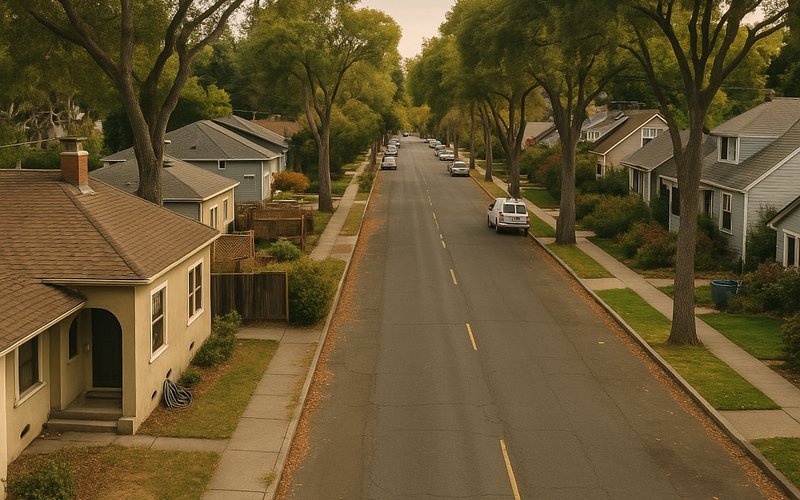
ADU rental demand in Palo Alto is strongest in Midtown, Downtown North, and the Barron Park neighborhood, where proximity to Stanford, Caltrain, and California Avenue’s retail corridor keeps tenant demand consistently high.
Midtown works well because it sits close to both El Camino Real and the Caltrain California Avenue station, making it attractive to tenants who commute without a car. Downtown North benefits from walkability to University Avenue and the Downtown Caltrain stop, which tech employees value highly. Barron Park, with its larger lots and quieter streets, tends to attract tenants who want more space and don’t mind a slightly longer walk to transit, often willing to pay a premium for a detached unit with a private yard.
A homeowner in Barron Park converted an existing detached garage into a 600 sq ft one-bedroom ADU for about $240,000 and now rents it for $3,900 a month to a software engineer working near the Stanford Research Park. That’s a strong return for a conversion project, since garage conversions typically cost less than ground-up detached builds.
Neighborhoods further from Caltrain and El Camino Real still perform well, just expect rents at the lower end of the range unless the unit is unusually well-finished.
What Is the 30% Rent Rule and Does It Apply to Palo Alto ADUs?
The 30% rent rule states that housing costs shouldn’t exceed 30% of a tenant’s gross income, and in Palo Alto it functions as a useful ceiling check rather than a strict cap, since most qualified tenants here earn well above the local median.
For a $4,500 a month ADU, that rule implies a tenant household income of roughly $180,000 a year. That sounds high, but it’s realistic for Palo Alto given the concentration of tech salaries in the area. Most landlords use the 30% rule as a screening tool during tenant applications, not as a limit on what they can charge.
Where this matters practically: if you’re pricing your ADU above what the 30% rule suggests for your target tenant pool, you may see longer vacancy periods even if the unit is beautifully finished. Price it too far below market, on the other hand, and you’re leaving money on the table every month. The sweet spot is pricing at or just below what a well-qualified local tenant can comfortably afford, which in Palo Alto usually still lands in the $3,500–$5,000 range for most unit sizes.
What Are the Disadvantages of Renting Out an ADU?
The main disadvantages are property tax reassessment, ongoing landlord responsibilities, and the upfront construction cost, which for a detached Palo Alto ADU runs $350,000 or more before it generates a dollar of income.
Property taxes will increase because Santa Clara County reassesses the added value of new construction, though only the ADU’s assessed value gets added, not your entire property. Expect an increase of a few thousand dollars a year depending on the unit’s size and finish level.
Being a landlord also means real responsibilities: tenant screening, maintenance calls, potential vacancy periods, and California’s tenant protection laws that make eviction slower and more complex than many first-time landlords expect. And if you’re financing the ADU, you’re carrying that debt for years before the rental income fully offsets it.
- Upfront cost of $220,000–$550,000 depending on size and type, paid before any rent comes in
- Property tax increase from county reassessment of the new structure
- Landlord duties: repairs, tenant turnover, and compliance with state rental law
- Vacancy risk if the unit is priced above what local tenants can reasonably afford
None of this makes an ADU a bad investment, it just means you should go in with real numbers instead of assuming pure profit from day one.
How to Find the Right ADU Builder in Palo Alto to Maximize Your Rental Return
The right ADU builder in Palo Alto is one with direct experience navigating the city’s permitting process, realistic cost estimating, and a design approach that prioritizes rentability, not just square footage. That combination is what actually protects your rental income.
Ask any builder you’re considering how many ADU permits they’ve pulled through Palo Alto’s Planning and Development Services Department in the past two years. Ask to see completed projects, not renderings. And ask specifically how they’d lay out the unit to maximize rent, because a poorly placed kitchen or an awkward bedroom can cost you hundreds a month in lost rent for the life of the property.
If you’d like an accurate quote for your specific lot, our team at King David Home Builder’s Palo Alto ADU builders page handles design, permitting, and construction as one process, which keeps timelines tighter and avoids the costly redesigns that come from hiring a designer and builder separately.
We’ve also written a detailed breakdown of ADU costs by Palo Alto neighborhood if you want to compare pricing before you commit to a design. And if you’re weighing an ADU against other ways to add space, our guide to home remodeling options in Palo Alto covers how ADUs, room additions, and kitchen remodels compare for both livability and return.
The math on ADU rental income in Palo Alto is genuinely favorable right now, driven by a job market that isn’t slowing down and a housing supply that isn’t catching up. But the return depends entirely on getting the size, location, and layout right from the start. If you’re serious about building an ADU that performs as a rental, not just a nice addition to the property, talk to a builder who’s done it before in this specific market. Reach out to King David Home Builder for a free consultation on your lot, your budget, and what you can realistically expect to earn.