
Quick Answer: When it comes to kitchen remodel resale value Palo Alto homeowners can typically expect a well-executed kitchen remodel to recoup 60-75% of its cost at resale, with mid-range remodels ($75,000-$150,000) performing better than luxury gut jobs above $250,000. A dated kitchen can also shave $100,000 or more off your sale price in this market, so the real question isn’t whether to remodel, it’s how much to spend and how fast you can turn it around before listing.
Your kitchen looks fine to you. It might be scaring off buyers willing to pay $3.5 million or more for your Palo Alto home. A kitchen remodel here recoups roughly 60-75% of its cost at resale, and in some cases it’s the single factor that separates a home stuck at 30 days on market from one that sells in a weekend with multiple offers. Palo Alto’s buyer pool skews toward tech professionals and move-up families who compare your listing against fully renovated homes in College Terrace and Old Palo Alto, so a tired kitchen reads as a red flag, not a discount opportunity. This guide walks through the real numbers, the neighborhoods where remodels pay off fastest, and how to decide between selling as-is, refreshing, or gutting the kitchen before you list. Get a free estimate from a licensed Palo Alto kitchen remodeling contractor before you make any decisions on timing or scope.
Is a Kitchen Remodel Worth It Before Selling Your Palo Alto Home?
Yes, in most cases. A kitchen remodel worth its cost in Palo Alto’s resale market almost always comes down to scope: a $40,000-$90,000 mid-range remodel pays off far more reliably than a $300,000 luxury gut renovation. The math isn’t about whether buyers notice a new kitchen, they absolutely do, it’s about whether your spending matches what the market will actually pay back.
Here’s the thing about Palo Alto specifically: home values here are high enough that a dated kitchen creates a disproportionate drag on price. Buyers touring a $4 million home in Professorville expect a kitchen that matches the price tag. When it doesn’t, they don’t just discount the price of the kitchen, they discount their confidence in the rest of the house. That psychological effect is worth more than any spreadsheet ROI calculation.
But timing matters just as much as scope. A remodel that drags on for five or six months can cost you a selling season, and carrying costs on a Palo Alto property (property tax, insurance, utilities) add up fast while contractors are still framing cabinets. So the real question isn’t just “is it worth it,” it’s “is it worth it given how long I have before I need to list.”
How Much Resale Value Does a Kitchen Remodel Add in Palo Alto?
In Palo Alto, a kitchen remodel typically returns 60-75% of its cost at resale, with the return ratio dropping as the remodel budget climbs past $150,000. A $60,000 mid-range remodel might add $40,000-$48,000 in sale price, while a $250,000 luxury remodel might only add $150,000-$175,000 in comparable value.
The reason isn’t that expensive kitchens aren’t beautiful, they usually are, it’s that Palo Alto buyers are paying for the home and the lot first, the kitchen second. A remodeled kitchen helps you sell faster and avoid price reductions, but it rarely recoups dollar-for-dollar past a certain spending threshold.
| Remodel Tier | Typical Cost | Estimated Value Added | Recoup Rate |
|---|---|---|---|
| Cosmetic refresh | $15,000-$35,000 | $18,000-$28,000 | 75-85% |
| Mid-range remodel | $50,000-$90,000 | $35,000-$60,000 | 60-70% |
| High-end remodel | $120,000-$180,000 | $75,000-$115,000 | 55-65% |
| Luxury gut renovation | $220,000-$350,000 | $130,000-$190,000 | 45-55% |
A homeowner in the Barron Park neighborhood recently spent $68,000 on a mid-range remodel, refinished cabinets, quartz counters, new appliances, before listing. Their agent reported it added roughly $50,000 to the final sale price and helped the home sell in nine days instead of the typical three to four weeks for that street. That’s the sweet spot: enough spend to remove the “dated” stigma, not so much that you’re gambling on buyers valuing luxury finishes the way you do.
Cosmetic Refresh vs. Full Gut Remodel: Which Pays Off Before Selling?
A cosmetic refresh pays off better before selling in almost every Palo Alto case. Refreshing (new paint, refaced cabinets, updated hardware, new counters) costs a fraction of a gut remodel and recoups a higher percentage, because you’re removing the “outdated” signal without overspending on finishes the next buyer might tear out anyway.
Honestly, most contractors will tell you buyers don’t distinguish between a $30,000 refresh and a $150,000 custom remodel from a listing photo. They notice the same three things: does it look clean, does it look current, and does the layout work. A full gut remodel matters more when the layout itself is broken, think a galley kitchen that can’t accommodate an island, or when you’re dealing with an Eichler-style open floor plan that needs structural changes to modernize.
| Factor | Cosmetic Refresh | Full Gut Remodel |
|---|---|---|
| Typical timeline | 2-4 weeks | 10-18 weeks |
| Typical cost | $15,000-$40,000 | $120,000-$300,000+ |
| Best for | Functional layout, dated finishes | Broken layout, structural issues |
| Risk before selling | Low, fast payback | Higher, depends on buyer taste |
If your kitchen has a workable layout and just looks tired, a refresh is almost always the smarter play before listing. Save the full gut remodel for homes where the kitchen genuinely can’t function for modern buyers, and even then, run the numbers against what a comparable full home remodeling project would return before you sell versus selling the home as-is at a slight discount.
Does the 30% Remodeling Rule Apply in Palo Alto’s Luxury Market?
Not really, and this trips up a lot of Palo Alto sellers. The traditional “30% rule,” which says your kitchen remodel budget shouldn’t exceed 30% of your home’s value, was built for markets with median home prices around $400,000-$500,000. In Palo Alto, where median home prices run well past $3 million, applying that rule literally would suggest a $900,000-$1 million kitchen budget, which is absurd.
What actually matters in a luxury market like Palo Alto is relative positioning: does your kitchen match the finish level of comparable listings in your price bracket, not a fixed percentage of home value. A $2.8 million home in College Terrace competing against renovated $3.1 million homes needs a kitchen that closes that gap, but it doesn’t need a $900,000 kitchen to do it.
So instead of the 30% rule, think in terms of comparable-driven spending: look at three to five recent sales in your neighborhood and price bracket, note their kitchen finish level, and spend just enough to match or slightly exceed that bar. Overspending past what comparable homes show rarely gets recouped, because appraisers and buyers alike anchor to the neighborhood, not your invoice.
What Do Palo Alto Buyers Actually Expect From a Listing Kitchen?
Palo Alto buyers expect quartz or quartzite counters, a functional island, integrated or high-end stainless appliances, and enough storage for a family that cooks daily, not just reheats takeout. This is a market where buyers are often comparing your kitchen to friends’ recently renovated homes in Crescent Park or Community Center, so the bar for “acceptable” keeps climbing.
Open-concept flow matters more here than almost anywhere else in the Bay Area. Buyers touring older homes in the Midtown or Ventura neighborhoods specifically ask whether walls separating the kitchen from the living space can come down, and a kitchen that still feels closed off from an entertaining space reads as a project, not a finished home.
- Quartz or natural stone counters (laminate is an instant red flag at this price point)
- A functional island with seating, even in smaller footprints
- Updated appliances, stainless or panel-ready, ideally less than 5 years old
- Soft-close cabinetry and updated hardware
- Enough electrical capacity for induction ranges, which more buyers are requesting
Skipping any of these doesn’t kill a sale, but it invites a lower offer or a repair credit request during negotiations, which often costs more than fixing it upfront would have.
How Does an Updated Kitchen Affect Appraisal Value on High-Priced Palo Alto Listings?
An updated kitchen raises appraisal value primarily through comparable sales adjustments, not a direct dollar-for-dollar line item. Appraisers working high-priced Palo Alto listings use recent comps and apply upward or downward adjustments based on kitchen condition relative to those comps, typically in the range of $15,000-$60,000 depending on price bracket and scope.
Here’s what surprises a lot of sellers: appraisals in Palo Alto often lag behind what buyers are actually willing to pay, because comp data takes time to catch up to renovated inventory. That means a freshly remodeled kitchen can help you get a stronger offer from a buyer, but the appraisal supporting a jumbo loan might come in lower than the sale price, especially in fast-appreciating micro-markets. This is one reason cash offers and well-qualified buyers with strong down payments matter more in Palo Alto than in markets where appraisal gaps are rare.
A remodel also helps on the flip side: a visibly outdated kitchen can trigger a “condition adjustment” that pulls appraised value down, sometimes enough to jeopardize financing on a home that’s otherwise priced correctly for the neighborhood.
Which Palo Alto Neighborhoods See the Biggest Return on Kitchen Remodels?
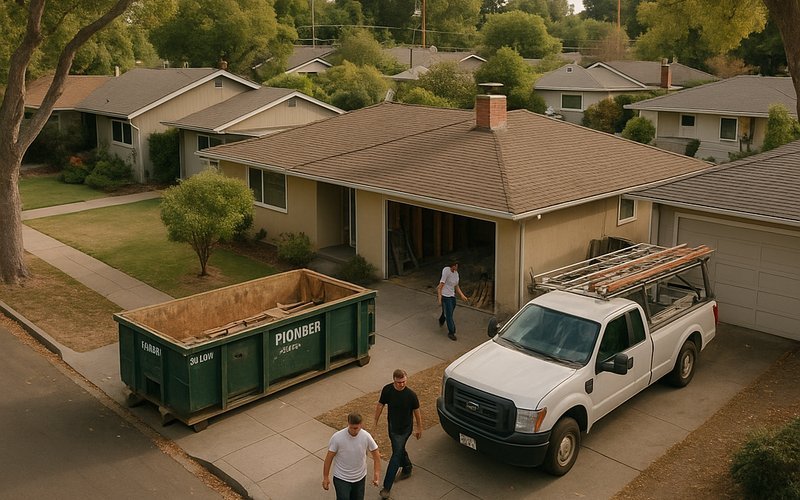
Neighborhoods with a mix of original mid-century homes and recently remodeled comps see the biggest kitchen remodel returns in Palo Alto, because the contrast between updated and dated inventory is sharpest there. Barron Park and parts of Midtown fit this pattern well: enough renovated comps exist to set buyer expectations high, but enough original kitchens remain that a remodel meaningfully differentiates your listing.
Old Palo Alto and Crescent Park operate differently. Home values there are driven more by lot size, architecture, and school assignment than by kitchen finish level, so while a remodel still helps, the percentage return is often lower simply because the home’s ceiling price is already set by land value. In these neighborhoods, a tasteful refresh usually outperforms a full luxury remodel dollar-for-dollar.
Neighborhoods with a high concentration of Eichler homes present a special case. Buyers specifically seeking Eichlers expect kitchens that respect the original open floor plan and mid-century character, and a remodel that ignores that context, going with a style that clashes with the home’s architecture, can actually underperform compared to a period-appropriate update.
Should You Pair a Kitchen Remodel With a Larger Renovation Before Selling?
Sometimes, but usually not right before listing. Pairing a kitchen remodel with a larger renovation, like a room addition or a second-story addition, makes sense when the home’s overall square footage or layout is genuinely limiting its value ceiling, not simply because contractors are already on site.
If your Palo Alto home is significantly smaller than neighborhood comps, say a 1,600 sq ft home surrounded by 2,400 sq ft renovated properties, a kitchen remodel alone won’t close that value gap. In that situation, it’s worth evaluating whether a room addition or even a full second-story addition makes more financial sense than kitchen finishes alone. But if your square footage is already competitive, adding scope before selling usually just adds risk and timeline without proportional return.
The bigger question, house-wide renovation versus targeted kitchen work, deserves its own analysis before you commit a budget. That’s exactly what we break down in our guide on whether home remodeling is worth it before selling in Palo Alto, which walks through the full decision tree for larger projects, not just kitchens.
How to Decide: Sell As-Is, Refresh, or Remodel Your Palo Alto Kitchen?
Decide based on three factors: how much time you have before listing, how your kitchen compares to active competing listings, and how much cash you can deploy without financing. If you have less than 60 days, a refresh is almost always the safer choice, since a full remodel risks missing your selling window entirely.
If you’re touring competing listings and every one has an updated kitchen while yours doesn’t, that’s a strong signal you need at least a refresh to avoid sitting on market or absorbing a larger price cut than the remodel would have cost. And if your kitchen layout is genuinely broken, closed off, poor storage, no room for an island, a full remodel or even a modest addition might be the only path to competitive positioning.
Selling as-is makes sense when you’re pricing to reflect the kitchen’s condition upfront, targeting buyers who plan to renovate anyway, often investors or contractors themselves. This works in Palo Alto’s market specifically because land value is high enough that some buyers are effectively purchasing the lot and treating the structure as a placeholder.
Next Steps for Palo Alto Homeowners Planning to Sell
Start by getting a written comparison of your kitchen against three to five recent sales in your price bracket and neighborhood. That comparison, more than any national ROI statistic, should drive your spending decision. From there, get quotes on both a refresh and a full remodel so you’re comparing real numbers, not estimates from memory or a general contractor’s rule of thumb.
If you’d like an accurate quote for your specific kitchen and timeline, our team at King David Home Builders handles both scopes regularly across Palo Alto, from quick two-week refreshes to full kitchen remodeling projects in Palo Alto. We’ll also tell you honestly if your money is better spent elsewhere, on a small addition, an ADU for rental income, or simply pricing the home to reflect its current condition. Whatever you decide, decide it with real comps and real contractor numbers in hand, not a generic percentage pulled from a national remodeling report that has nothing to do with how Palo Alto actually sells.