
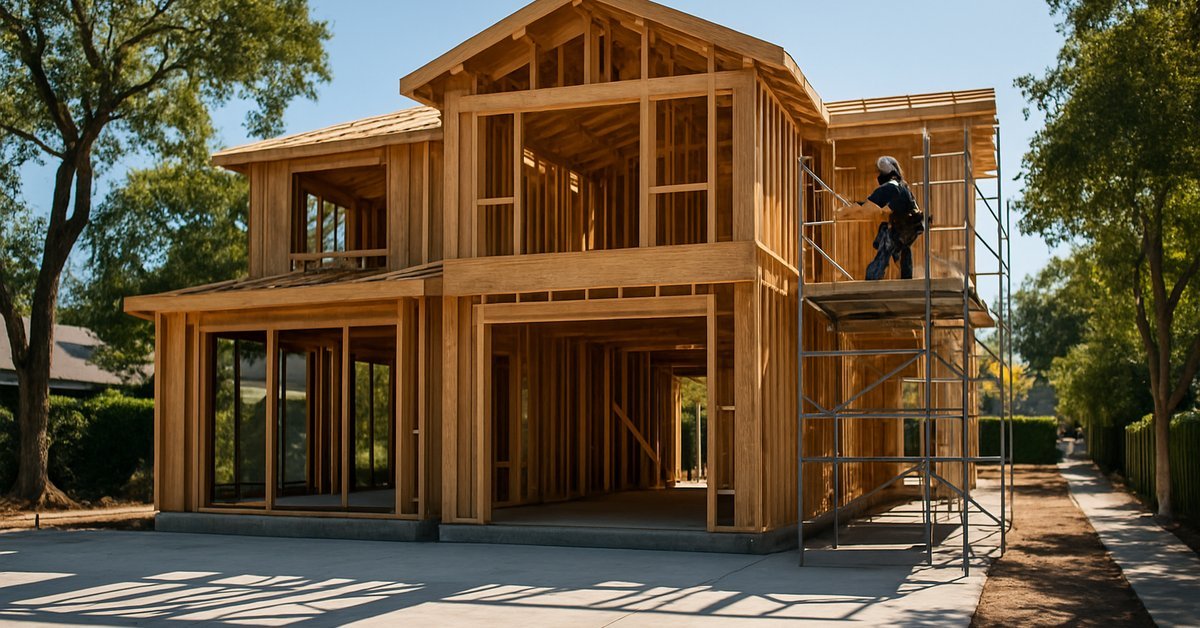
Many Many luxury home builders serving the Peninsula also work in Palo Alto, but choosing the right one for this specific market isn’t just about finding someone who builds beautiful homes. It’s about finding someone who understands a market where land values alone can exceed $3 million, where the City’s Planning and Development Services Center runs a detailed discretionary review process, and where getting the permit sequence wrong can stall a project for months. This guide covers the full end-to-end process, which neighborhoods are most active, how bundling scopes saves money, and exactly what to look for before you sign anything. Talk to a licensed custom home builder in Palo Alto today to get a free project estimate.
What Does a Luxury Home Builder in Palo Alto Actually Do?
A luxury home builder in Palo Alto is the general contractor responsible for delivering a fully custom residence to a defined spec, timeline, and budget, while managing every licensed subcontractor, permit, and inspection along the way. That’s distinct from a production builder, who builds the same floor plan in multiple lots. Here, every detail is specific to your site and your vision.
The real difference between a luxury builder and a standard custom builder comes down to three things: material sourcing relationships, project management depth, and design integration. Luxury builders in Palo Alto typically work with high-end millwork shops, stone fabricators, and specialty mechanical contractors that a mid-range builder simply doesn’t have relationships with. They’re also managing projects that frequently run 4,500–8,000 square feet with high-spec finishes throughout, which requires a larger site management team and more detailed scheduling.
And they’re accountable for the permit process in a way that general design firms aren’t. In Palo Alto, that means navigating not just building permits but often Architectural Review Board approvals, arborist reports for protected trees, and stormwater management plans, all before a shovel goes in the ground. The builder who understands that process from the start saves you significant time.
So when you’re searching for luxury home builders on the Peninsula or in the broader South Bay area, understand that Palo Alto’s regulatory environment is its own category. Experience in this city specifically matters.
What’s the Real Process for a High-End Build in Palo Alto from Design to Certificate of Occupancy?
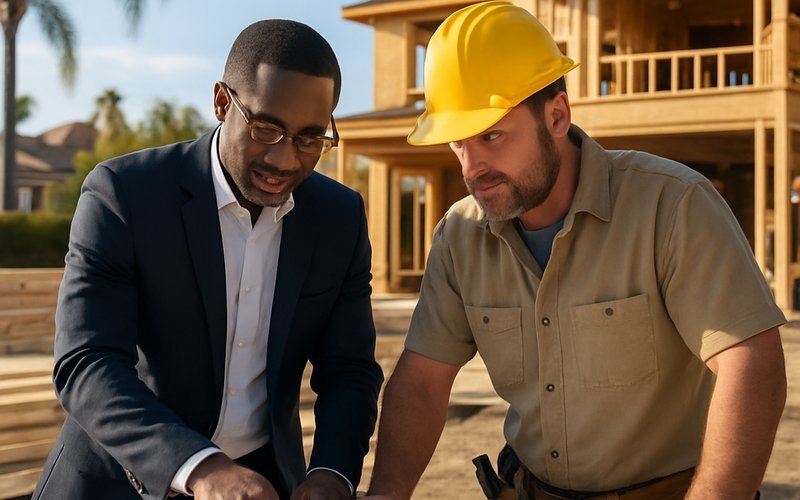
In Palo Alto, a full luxury custom home build typically follows six distinct phases, and the sequencing is non-negotiable. Skipping steps or trying to fast-track permitting doesn’t work here.
Phase 1: Pre-Design and Site Due Diligence
Before any design work starts, your builder should order a title report, a topographic survey, and a soils investigation. In many neighborhoods, you’ll also need an arborist report before you can determine where the building envelope actually sits. This phase takes 4–8 weeks and shouldn’t be rushed.
Phase 2: Architectural Design and Structural Engineering
Most luxury builders in Palo Alto work closely with a dedicated architect, either in a design-build structure or through a collaborative relationship. Full architectural drawings, structural calculations, Title 24 energy compliance documents, and mechanical, electrical, and plumbing plans all need to be complete before you submit to the City. This phase runs 3–6 months for a complex project.
Phase 3: City of Palo Alto Permitting
Plan check at the City of Palo Alto Planning and Development Services Center typically takes 8–16 weeks for a new luxury residence. Projects in historic districts or near protected trees take longer. You’ll often go through two or three rounds of corrections before permits are issued. Your builder should be tracking this actively, not waiting for calls.
Phase 4: Construction
Active construction on a 5,000–7,000 square foot luxury home in Palo Alto runs 12–18 months depending on finish complexity. Custom cabinetry, imported stone, and specialty glass all have long lead times that need to be ordered early.
Phase 5: Final Inspections and Certificate of Occupancy
The City’s final inspection process involves sign-offs from multiple departments: building, electrical, plumbing, mechanical, and sometimes planning. Budget 4–8 weeks for this phase. A good builder will schedule inspections proactively so you’re not waiting in queue repeatedly.
Which Palo Alto Neighborhoods Are Seeing the Most Luxury Home Activity Right Now?
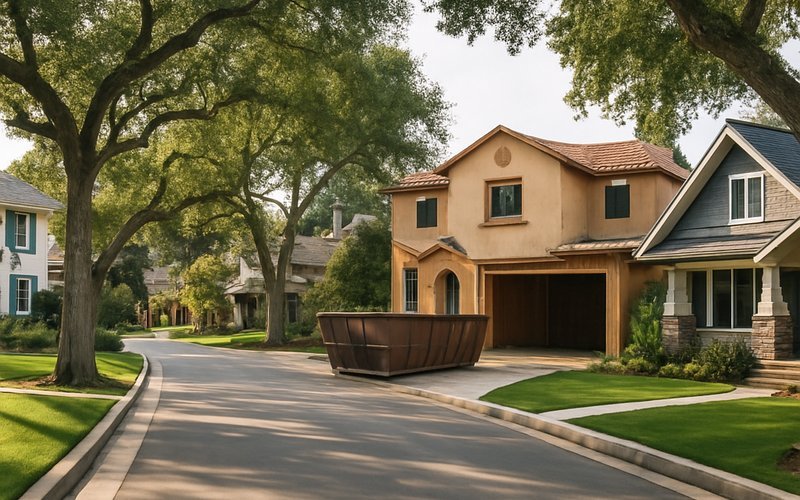
Palo Alto has several distinct residential areas, and the luxury build activity is concentrated in specific pockets.
Crescent Park remains one of the most active areas for full tear-down-and-rebuild projects. The large lot sizes, mature tree canopy, and proximity to downtown Palo Alto make it a consistent target for high-end buyers who want to build from scratch. A recent project in Crescent Park involved a 6,200 square foot new construction with a detached ADU, coming in at approximately $7.4 million in total construction cost before land. The arborist review alone added six weeks to the permitting process because of three protected oaks on the lot.
Old Palo Alto sees significant luxury renovation and addition activity, though full teardowns are more scrutinized here given the historic character of the neighborhood. Many homeowners in Old Palo Alto are adding second stories or substantial rear additions to existing Craftsman-era homes, often bundled with full interior remodels. Projects routinely run $1.8–$3.2 million for a major addition and full gut renovation.
Barron Park has become increasingly active as buyers look for larger lots where they can build custom homes with more architectural flexibility. The neighborhood’s proximity to parks and quieter streets appeals to families building long-term primary residences rather than investment properties.
And in Professorville, the historic context adds a layer of complexity. Any new construction or substantial alteration here often triggers Architectural Review, which means your design has to be sensitive to neighborhood context before the City will approve it.
How Do Luxury Builders in Palo Alto Handle ADUs, Room Additions, and Kitchen Remodels as Part of One Project?
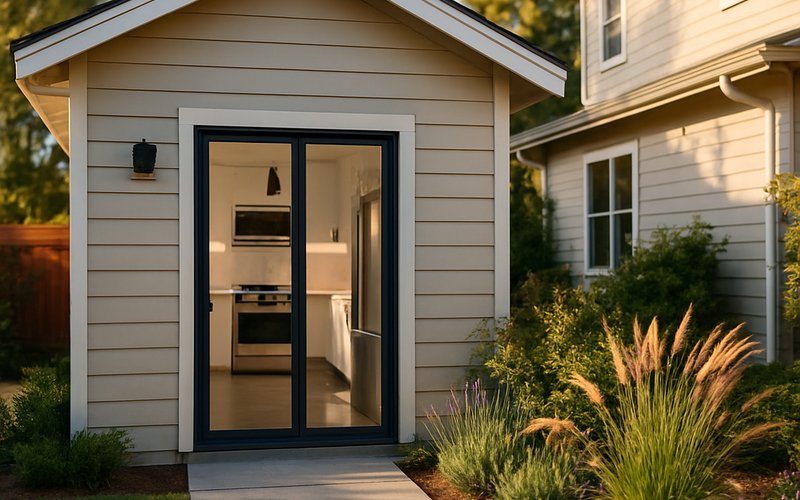
Bundling multiple scopes under one contractor is one of the smartest moves you can make on a high-end Palo Alto project. It’s not just convenient — it saves real money and reduces permit coordination headaches significantly.
When a luxury builder manages your new custom home, a detached ADU in Palo Alto, and a high-spec kitchen remodel as a single contract, the design drawings coordinate across all three. The engineer draws the structural plans once. The permit applications are submitted together or in a controlled sequence. And you have one point of accountability for the entire project.
| Scope | Typical Cost Range (Palo Alto) | Permit Required | Typical Add-On Timeline |
|---|---|---|---|
| Detached ADU (800–1,200 sq ft) | $350,000–$620,000 | Yes, separate permit | Add 3–4 months to main build |
| Room Addition (400–800 sq ft) | $220,000–$480,000 | Yes | Add 2–3 months |
| Full Kitchen Remodel (high-end) | $120,000–$280,000 | Yes (if structural or MEP changes) | Add 6–10 weeks |
| Second-Story Addition | $400,000–$750,000 | Yes | Add 4–6 months |
The key thing to understand about ADU additions on luxury projects: Palo Alto has been generally ADU-friendly under California’s state housing mandates, but design review still applies in certain overlay zones. Your builder should know whether your specific lot triggers discretionary review before you commit to a design. For a deeper look at ADU specifics, this guide to ADU companies in Palo Alto covers the process in detail.
Honestly, the biggest risk with bundled scopes isn’t cost — it’s a builder who overpromises their bandwidth. Make sure whoever takes on your full project has a dedicated project manager assigned to your site, not just a GC juggling five jobs at once.
What Does the City of Palo Alto Planning and Development Services Center Require Before a Luxury Build Can Start?

The City of Palo Alto Planning and Development Services Center is your primary contact point for all permits on a new luxury home build. Understanding what they require upfront prevents costly surprises.
For new residential construction, you’ll need a complete building permit application that includes architectural drawings, structural engineering calculations, Title 24 energy compliance documentation, and a site plan showing setbacks, lot coverage, and floor area ratio calculations. If your project exceeds the allowed FAR for your zoning district, you’ll need a variance — and those take additional time.
Projects that trigger Architectural Review (typically new construction and major alterations visible from the street) go through a separate review process. The Architectural Review Board meets on a set schedule, and if your project requires their approval, add 8–14 weeks to your pre-construction timeline just for that step.
Arborist reports are required any time construction activities come within the protected zone of a significant tree. In a neighborhood like Crescent Park or Old Palo Alto, this is almost always relevant. The City’s Urban Forestry section reviews these independently. Don’t assume your architect handles this — confirm in writing who’s responsible.
Permit fees for a new luxury home in Palo Alto are calculated based on construction valuation. For a project valued at $4–6 million, expect permit fees in the range of $60,000–$110,000, not including school fees, which are calculated separately per square foot. These are real costs that belong in your budget from day one. If you want to compare how Palo Alto’s process stacks up against a neighboring market, the Traditional Home Builders San Jose guide is a useful reference for understanding how permit sequencing and builder roles differ.
How Do You Vet and Choose the Right Luxury Home Builder in Palo Alto?
The right luxury home builder in Palo Alto isn’t necessarily the biggest firm or the one with the most Instagram-ready portfolio. It’s the one with verifiable local experience, a clean license record, and a project management process that can handle your specific scope.
Verify License and Insurance First
Before anything else, check the California Contractors State License Board (CSLB) to confirm their Class B General Contractor license is active and bond is current. This takes two minutes at cslb.ca.gov. Don’t skip it. A luxury price tag doesn’t guarantee a clean license record.
Ask for Palo Alto-Specific References
Request references from at least two completed projects within Palo Alto city limits, not just the broader Peninsula. Ask those homeowners specifically how the builder handled the City’s permit process, how they communicated during delays, and whether the final cost matched the original estimate within a reasonable range (under 10% variance is reasonable for a well-scoped luxury project).
Understand Their Subcontractor Network
Luxury finishes require specialty trades: custom cabinet shops, stone fabricators, specialty flooring contractors. Ask who they use for each. If they can’t name their key subs with confidence, that’s a flag. Strong builders have long-term relationships with the same specialty contractors and can deliver on lead times because of that history.
Clarify the Contract Structure
Most luxury builders in Palo Alto work on either a cost-plus model (you pay actual costs plus a contractor fee, typically 15–20%) or a fixed-price contract. Cost-plus gives more transparency but shifts budget risk to you. Fixed-price gives certainty but typically includes contingency padding. Neither is wrong — just understand what you’re agreeing to.
For a broader look at how custom home builders in Palo Alto position their services and pricing, this overview of what to expect from a custom home builder in Palo Alto is worth reading before you start interviews.
Is a Traditional Custom Home Build Right for Your Palo Alto Project?
Not every high-end project needs a full luxury custom build from the ground up. Some Palo Alto homeowners are better served by a major addition, a full-home renovation, or a gut remodel of an existing structure than by tearing down and starting over.
The demolition and rebuild path makes the most sense when the existing structure has significant deferred maintenance, a poor floor plan that can’t be corrected through renovation, or when you want a substantially larger home than the current building footprint allows. In Palo Alto, where the existing housing stock includes many homes built in the 1950s and 1960s, these conditions come up frequently.
But if the bones are solid and the lot is tight, renovation is often faster, cheaper, and less disruptive from a permitting standpoint. A full gut renovation of a 3,000 square foot home in Palo Alto can cost $900,000–$1.6 million at luxury finish levels, which is substantially less than a ground-up build of the same size. The tradeoff is less design freedom, particularly with structural layouts.
So the real question isn’t “which approach sounds better?” It’s “what does my specific lot, budget, and timeline actually support?” That’s a conversation worth having with a qualified builder before you invest in architectural drawings.
If you’re ready to move from research to real numbers, connect with King David Home Builders to discuss your Palo Alto luxury build — and get a project assessment based on your actual site.