
If you’ve been searching for questions to ask adu builder palo alto homeowners recommend, you’re already ahead of most people who dive in unprepared—because knowing the right questions before you sign anything could save you tens of thousands of dollars and months of frustration. The Bay Area construction market is unlike anywhere else in California, and Palo Alto’s specific permitting environment makes it even more unforgiving. One wrong hire and you’re looking at stop-work orders, budget overruns, and a half-built structure sitting in your backyard.
Why Vetting Your ADU Builder in Palo Alto Is Different From Hiring Any Contractor
Building an ADU in Palo Alto isn’t the same as adding a deck or remodeling a bathroom. The stakes are higher, the process is more layered, and the local regulations are genuinely specific to this city. Most homeowners who’ve been burned didn’t skip vetting entirely. They just didn’t ask the right questions.
Palo Alto sits in one of the highest-cost construction markets in the country. Labor rates, material costs, and permit fees all run above the national average. A detached ADU that might cost $280,000–$380,000 in other parts of California can easily reach $350,000–$500,000+ here depending on size, finishes, and site conditions. That’s not a market where you can afford to guess on a builder. You can learn more about what drives those numbers in this ADU cost breakdown for Palo Alto.
And Palo Alto’s Planning and Community Environment (PCE) Department has its own rhythm. Builders who mostly work in San Jose, Sunnyvale, or Santa Clara know those cities’ processes, not Palo Alto’s. Local experience isn’t a bonus. It’s the baseline.
Question 1: Are You Licensed With the CSLB and Properly Insured?
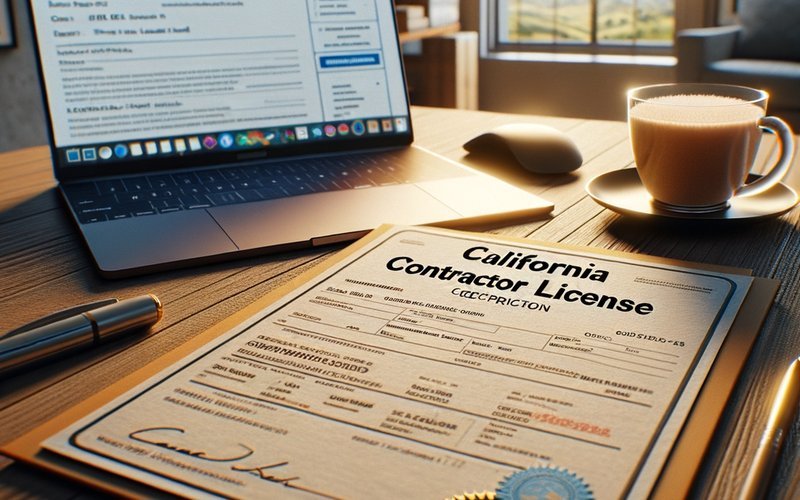
Every legitimate contractor working in California must hold an active license through the Contractors State License Board (CSLB). For ADU construction, you’re typically looking for a Class B General Building Contractor license, though some specialized work may fall under a C-8 (Concrete) or other classification. Don’t just take their word for it.
You can verify any contractor’s license in about two minutes at cslb.ca.gov. Look up their name or license number, confirm the license is active, and check whether there are any disciplinary actions or complaints on file. A surprising number of homeowners in Santa Clara and Palo Alto skip this step entirely and end up with unlicensed crews.
Beyond the CSLB license, ask specifically about workers’ compensation insurance. In California, it’s required if they have employees. Ask for a current certificate of insurance, not a verbal assurance. If a worker gets hurt on your property and the contractor doesn’t have workers’ comp, you could face liability. That’s a risk no one should take on a $300,000+ project.
Question 2: How Many ADU Permits Have You Pulled in Palo Alto Specifically?
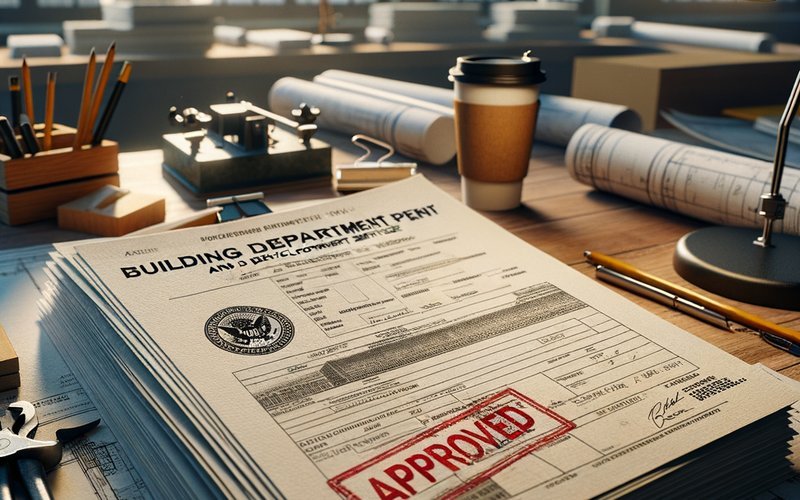
Palo Alto ADU permit experience is one of the clearest ways to separate builders who will move your project forward from ones who will slow it down. Pulling permits in Palo Alto means dealing with the PCE Department at 285 Hamilton Avenue, and that office has specific expectations around plan submissions, setback documentation, and utility coordination that differ from neighboring cities.
Ask for the actual number. Not “we’ve done plenty of ADUs” but “we’ve pulled X ADU permits in Palo Alto in the last three years.” A builder who knows the PCE process can often move through plan check in 8–14 weeks. Someone learning on your project might take 20–30 weeks just to get through the permit phase. That’s time and money.
The questions to ask your ADU builder in Palo Alto don’t stop at permit count either. Ask whether they know Palo Alto’s specific owner-builder restrictions, fire sprinkler requirements for new detached ADUs, and the city’s utility connection fees. These aren’t obscure details. They’re line items that show up in your budget. If a builder looks blank when you mention the PCE, that tells you something. A professional adu builder palo alto team will know these requirements without having to look them up.
Question 3: Who Are Your Subcontractors and How Are They Managed?
Your general contractor won’t do every trade themselves. They’ll hire subcontractors for electrical, plumbing, HVAC, framing, and other specialized work. The quality of those subs, and how tightly the GC manages them, determines a lot of what your finished ADU looks like.
Ask for the names of the subs they use regularly. Not just the trade. The actual company. A builder who uses the same electrician on every job has an established relationship, a shared workflow, and accountability. A builder who hires whoever’s available each week has none of that.
You can also verify subcontractor licenses through the same CSLB lookup tool. Licensed plumbers and electricians in California must hold their own active licenses. If a GC is using unlicensed subs to cut costs, that liability flows back to your property. And if something fails inspection, you’re the one stuck paying to redo it.
In Santa Clara and across the Bay Area, the “day labor” model is common on tight-margin jobs. It’s not always wrong, but it creates a murky liability chain. You want clarity on who is doing what, who their license covers, and who you call if something goes wrong.
Question 4: What Does Your Contract Actually Cover?

A good ADU contract isn’t just a price and a signature. It’s a document that protects you if anything goes sideways, and things almost always come up on a project of this scale. Here’s what you should expect to see spelled out before you sign anything.
| Contract Element | What to Look For | Red Flag |
|---|---|---|
| Scope of Work | Line-by-line description of every trade and finish | Vague phrases like “as discussed” or “standard finishes” |
| Change Order Process | Written approval required before any change proceeds | Verbal-only change order agreements |
| Payment Schedule | Tied to construction milestones, not calendar dates | Large upfront deposit over 10–15% of total cost |
| Timeline & Milestones | Specific dates with completion benchmarks | No dates, just “estimated 6 months” |
| Lien Waiver Language | Conditional lien waivers from subs upon payment | No mention of lien protection at all |
| Permit Responsibility | GC is named as the responsible party for all permits | Contract shifts permit duties to homeowner |
California law limits the upfront deposit a contractor can collect to 10% of the total job cost or $1,000, whichever is less for home improvement contracts. Some ADU builders try to negotiate around this. Don’t let them. A contractor asking for 30–40% upfront on a large project is a warning sign worth taking seriously.
Change orders are where budgets blow up. A well-written contract spells out exactly how changes are requested, priced, and approved. No surprises, no “we had to do it while we were in the wall.” Get it in writing before any change work starts.
Question 5: Can You Show References From Palo Alto or Nearby ADU Projects?
References matter more than a portfolio website. Any builder can post photos of nice-looking ADUs online. What you want is a homeowner you can actually call, who lives in Palo Alto or close by, who went through the permit process with this specific contractor.
Ask for at least two or three local references, and when you contact them, ask specific questions. Did the project finish on time? Was the final cost close to the original bid? Did the builder handle the Palo Alto permit process themselves or did issues get pushed onto you? And ask how the contractor responded when problems came up, because problems always come up.
If they can share the project address, even better. You can cross-reference completed ADU permit records through the City of Palo Alto’s public permit portal. Seeing an actual closed permit tied to a specific address is more concrete than a reference who says “they did a great job.” It also confirms the work was permitted at all, which matters enormously for your property’s title and future resale. You can find detailed guidance on that process in the Palo Alto ADU permit requirements guide.
Red Flags Unique to the Bay Area Construction Market
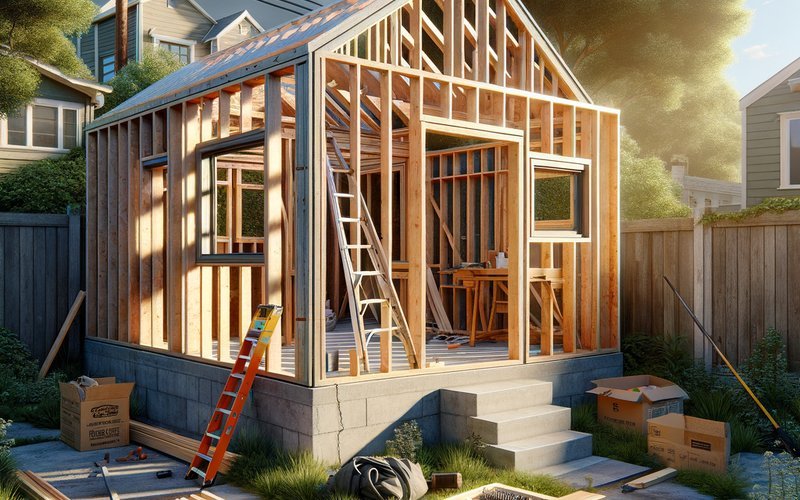
The Bay Area attracts contractors from across the state, and not all of them bring the experience or ethics to match the price tags in this market. A few warning signs are specific to this region and worth watching for.
| Red Flag | What It Usually Means | What to Do |
|---|---|---|
| Bid is 25–30% lower than everyone else | Missing scope, unlicensed subs, or bait-and-switch pricing | Ask for a line-item breakdown before comparing |
| Reluctance to pull permits | Can’t get permits, wants to work unpermitted, or is unlicensed | Walk away. Unpermitted ADUs have serious resale and legal consequences |
| Vague answers about subcontractors | Day labor model, no established trade relationships | Ask for names and license numbers of each sub |
| No local Palo Alto references | Little or no experience with PCE Department process | Request at least one Palo Alto-specific project example |
| Pressure to sign quickly | Avoiding scrutiny, may have other jobs lined up that take priority | Take at least 48 hours to review any contract |
Unusually low bids are one of the most common traps in the Bay Area market. A homeowner in the Crescent Park neighborhood recently shared that they chose a builder who came in at $180,000 for a detached ADU when two other bids were around $290,000–$320,000. Six months later, the project was stalled, the original scope was stripped down, and change orders had pushed the total above the higher bids anyway. The low bid was never real.
Permit resistance is the other big one. Some contractors openly suggest skipping permits to “save time and money.” In Palo Alto, that’s not just risky. It’s potentially catastrophic. Unpermitted ADUs can be flagged during a sale, may not be insurable as a rental unit, and can result in mandatory demolition orders in extreme cases. If a contractor even hints at avoiding the permit process, that conversation is over. For context on what a legitimate ADU project involves, the detached ADU vs. garage conversion comparison for Palo Alto is worth reviewing.
Ready to Find a Vetted ADU Builder in Palo Alto?
If you’re at the stage where you’re interviewing builders, you’ve already done the hard work of deciding to move forward. Don’t let a bad hire undo that. The five questions above give you a real framework, not just generic advice, to separate builders who can actually execute in Palo Alto’s market from those who can’t.
Before you reach out to anyone, here’s a quick checklist to have ready:
- CSLB license number and verification status for every builder you’re considering
- A list of Palo Alto-specific ADU projects they’ve completed with permit confirmation
- Names and license numbers of their key subcontractors
- A copy of their standard contract reviewed line by line before signing
- At least two local references you’ve actually called, not just emailed
King David Home Builders works throughout Santa Clara and serves homeowners in Palo Alto with ADU construction, room additions in Santa Clara, and custom home projects. If you want to talk through your project with a team that knows the Palo Alto PCE process and has the references to back it up, a free consultation is the right first step. No pressure, just answers.
The goal isn’t to make hiring harder. It’s to make sure that when you do sign, you’re confident you’ve found someone who can actually deliver what you’re paying for in one of the most demanding construction environments in California.