
The kitchen remodeling mistakes Palo Alto homeowners make most often begin long before a single cabinet is ordered, and understanding them is essential for anyone planning a kitchen remodel in this permit-intensive, design-sensitive Bay Area market. Santa Clara’s Community Development Department has processing timelines that catch even experienced homeowners off guard, and Eichler-era homes in Barron Park and Green Gables demand material choices that most big-box design centers won’t flag for you. This guide walks through the five mistakes that blow timelines and budgets, with real cost figures and contractor-level detail so you go in prepared.
If you’d like a free estimate from a licensed contractor before you commit to any plan, reach out to a kitchen remodeling specialist in Santa Clara to get your project scoped accurately.
Why Do So Many Santa Clara and Palo Alto Kitchen Remodels Go Over Budget?
Kitchen remodeling mistakes Palo Alto homeowners make most often aren’t about picking the wrong countertop. They’re about planning gaps that compound. A delayed permit adds weeks to your contractor’s schedule. That contractor now has to reschedule tile installers. The tile installers are booked three weeks out. Suddenly a 10-week project becomes 18 weeks, and carrying costs stack up fast.
In this market, labor rates are high, material lead times are long, and inspectors are thorough. Santa Clara homeowners often assume Palo Alto remodels run the same as projects closer to home. They don’t. The Development Services Center has its own review process, its own inspectors, and its own checklist. Skipping any step early creates downstream delays you can’t buy your way out of.
And the other driver of budget blowouts? Scope creep that wasn’t caught in the design phase. You open a wall and find knob-and-tube wiring. You pull out the old range hood and discover the duct work runs the wrong direction for your new layout. These surprises aren’t random bad luck. They’re predictable in homes built before 1975, which covers a large portion of the ranch and Eichler stock in Palo Alto. A good contractor prices contingency into the plan. A homeowner who skipped the design phase doesn’t know that contingency exists until the bill arrives.
Mistake #1: Underestimating Permit Timelines at Santa Clara’s Community Development Department

In Palo Alto, kitchen remodel permits go through the Development Services Center at 1500 Warburton Avenue, Santa Clara, and the review timeline is not short. For a standard kitchen remodel that includes electrical, plumbing, and structural changes, expect 6–10 weeks for permit approval from initial submission. If your plans need corrections or a second review cycle, add another 3–4 weeks.
Homeowners from Santa Clara often assume the permit process mirrors what they’ve experienced locally. It doesn’t. Palo Alto requires wet-stamped plans for any work that touches the gas line, moves a load-bearing wall, or relocates plumbing. That means you need a licensed architect or structural engineer on your team before you apply, not after your contractor starts framing.
A homeowner in Santa Clara’s Central Park neighborhood recently started a Palo Alto kitchen project in late January, expecting to begin demo in March. The permit came back with a correction notice in week four, requiring a plumbing reroute detail on the plans. Revised plans went back in mid-February. Permit issued in late March. Demo started in April. That’s a full 10-week delay before anyone touched a cabinet.
The fix is simple: build permit timelines into your project calendar before you set a contractor start date. If you need the kitchen done by a specific date, count backward from that date and start your permit application 12–14 weeks earlier than you think you need to. That buffer is not padding. It’s reality in Palo Alto.
Mistake #2: Choosing Materials That Clash With Eichler and Ranch-Style Homes in Green Gables and Barron Park
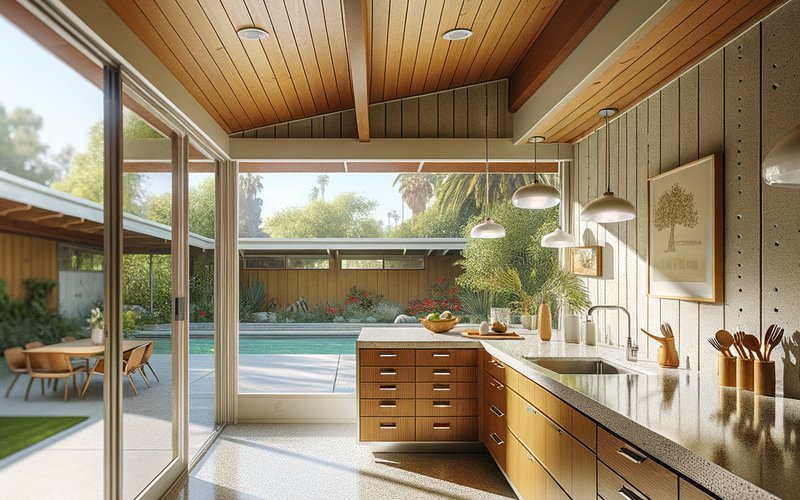
Santa Clara has Eichler homes concentrated in neighborhoods near Kiely Boulevard and the Squares area. These homes were designed with open floor plans, post-and-beam ceilings, radiant floor heating, and large glass walls. Their kitchens connect directly to living spaces with very little visual separation. That design language matters when you’re picking materials.
The most common mistake Santa Clara homeowners make here is selecting shaker-style raised-panel cabinetry and ornate hardware because it looks great in a traditional home, then installing it in a home with flat ceilings and exposed beams. The visual result is a mismatch that hurts resale value and makes the kitchen feel like it belongs in a different house.
Eichler kitchens respond best to flat-panel slab cabinets, teak or walnut accents, integrated hardware (or simple bar pulls), and quartz or concrete countertops. Warm, natural tones work better than cool grays. And because radiant floor heating is common in these homes, your flooring choice matters for thermal performance too. Thick natural stone can reduce heat transfer. Engineered hardwood or luxury vinyl plank over radiant works much better.
Ranch-style homes in other parts of Palo Alto have slightly more flexibility, but the same principle applies: match the era and the architecture. If you’re unsure, have a designer do a single 2-hour consultation before you lock in any materials. It’s a few hundred dollars that can save you a $15,000 cabinet redo.
Mistake #3: Hiring Unlicensed Contractors to Cut Costs in a High-COL Market
In a market where a mid-range kitchen remodel starts at $55,000, the temptation to save money by hiring an unlicensed contractor is real. Don’t do it. The risks in Palo Alto specifically are higher than in most other markets, and here’s why.
Palo Alto inspectors conduct in-person inspections for electrical, plumbing, framing, and final sign-off. An unlicensed contractor’s work will fail inspection. When it fails, you’re responsible for bringing the work up to code, hiring a licensed contractor to fix it, and paying for re-inspection. The savings evaporate fast. Worse, unpermitted work in a high-value home creates title issues that surface at resale.
| Contractor Type | Typical Bid Range (Mid-Size Kitchen) | CSLB Licensed? | Can Pull Palo Alto Permits? | Risk Level |
|---|---|---|---|---|
| Licensed General Contractor | $55,000–$110,000 | Yes | Yes | Low |
| Licensed Specialty Contractor (kitchen-focused) | $48,000–$95,000 | Yes | Yes (for their trade scope) | Low-Medium |
| Handyman / Unlicensed Worker | $18,000–$35,000 | No | No | High |
Before you hire anyone, verify their license on the California State License Board’s website at cslb.ca.gov. Enter the license number and confirm it’s active, bonded, and matches the contractor’s name and classification. For a full kitchen remodel, you want a Class B General Contractor license or a combination of Class C-10 (electrical) and C-36 (plumbing) specialty licenses if the GC is subcontracting those trades.
Honestly, most contractors will tell you the CSLB verification takes 90 seconds. Do it every time. No exceptions.
Mistake #4: Ignoring How a Kitchen Remodel Connects to Room Addition or ADU Plans

This is the mistake that costs the most money, and it’s the one homeowners almost never see coming. If you’re planning a room addition in Santa Clara or an ADU in the next two to five years, your kitchen remodel decisions today directly affect what those future projects cost and require.
Here’s a real example: a homeowner in Santa Clara’s Lawrence Expressway corridor remodeled their kitchen in 2022, relocating the main drain stack to improve their island layout. Two years later, they started planning a rear ADU. The new drain stack location conflicted with the planned ADU utility connection path, requiring a $9,000 re-route that wouldn’t have been necessary with the original plumbing position. No one told them to think about it before the kitchen remodel.
If you’re considering an ADU or addition, talk to your contractor about utility rough-ins, panel capacity, and structural load paths before the kitchen remodel begins. Adding a 200-amp sub-panel during a kitchen remodel while the walls are already open costs far less than returning to that wall two years later. It’s the same principle that drives experienced contractors to run conduit for future uses during any open-wall project.
For homeowners thinking ahead about ADU construction in Santa Clara, sequencing your projects correctly can save $10,000–$25,000 in redundant work.
Mistake #5: Skipping the Design Phase and Locking In Cabinets Too Early
Cabinets are almost always the longest-lead item in a kitchen remodel. Semi-custom cabinets take 8–12 weeks to deliver. Fully custom cabinets run 12–16 weeks. So homeowners rush to order them early, before the design is finalized. That’s the mistake.
The design phase isn’t just about picking door styles. It’s where you confirm the exact dimensions of your appliances, the location of your window trim, the ceiling height, and whether your refrigerator depth works with your cabinet depth. If you order cabinets before you’ve confirmed your appliance specs, you’ll be shimming gaps or returning cabinets at a 30% restocking fee. That’s a painful and entirely avoidable loss.
The right sequence is this: hire your contractor, do a full design phase with detailed drawings, confirm all appliance specs in writing, then order cabinets. Budget $2,500–$6,000 for a professional kitchen designer if you’re doing a major remodel. They’ll catch conflicts between the cabinet run, the window placement, and the island dimensions that a contractor working from a rough sketch simply won’t see until the cabinets arrive.
And don’t skip the 3D rendering step. Walking through a digital model of your kitchen before anything is ordered takes one week and costs almost nothing in the context of a $70,000 remodel. It has saved homeowners from cabinet and appliance mismatches more times than you can count.
What Does a Kitchen Remodel Actually Cost for Santa Clara Homeowners Working in Palo Alto?

Kitchen remodeling mistakes Palo Alto homeowners make are often rooted in budget miscalibration. Knowing the real cost ranges going in prevents you from being surprised mid-project. In this market, here’s what you’re actually looking at:
| Remodel Tier | Scope | Typical Cost Range | Timeline |
|---|---|---|---|
| Cosmetic Refresh | Cabinet reface, new countertops, new fixtures | $18,000–$35,000 | 4–6 weeks |
| Mid-Range Remodel | New cabinets, appliances, tile, and plumbing fixtures; no layout change | $55,000–$85,000 | 10–14 weeks |
| Full Gut Remodel | Everything new, layout change, electrical upgrade | $85,000–$130,000 | 14–20 weeks |
| High-End Custom | Custom cabinets, luxury appliances, structural changes, designer finishes | $130,000–$200,000+ | 20–28 weeks |
These ranges reflect current labor and material costs in the Palo Alto market, which runs 15–25% higher than national averages. Labor alone accounts for roughly 35–40% of total project cost. Permit fees through Santa Clara’s Community Development Department typically add $2,500–$6,000 depending on project scope and valuation.
For homeowners in Santa Clara’s Rivermark area or near El Camino Real planning a full gut remodel of a 180–220 sq ft kitchen, budget a minimum of $85,000 and hold a 15% contingency for surprises behind walls. That’s not pessimism. That’s what experienced contractors tell their clients every time.
If you want accurate numbers for your specific kitchen size and scope, explore detailed kitchen remodel cost breakdowns for this market before you request your first contractor bid.
How Do Santa Clara Homeowners Find the Right Kitchen Remodeling Contractor in Palo Alto?
Start with the CSLB verification, as covered above. But license status is just the baseline. What separates a good kitchen contractor from a great one in this specific market is Palo Alto permit experience, familiarity with mid-century home construction, and a portfolio of projects in the Eichler or ranch-style category.
Ask every contractor you interview these four questions before you agree to anything:
- How many kitchen permits have you pulled through Santa Clara’s Community Development Department in the last two years?
- Have you worked on Eichler homes before, and can you show me examples?
- Who handles your permit application and inspection coordination?
- What’s your process if a permit review comes back with a correction notice?
A contractor who stumbles on those questions probably hasn’t done much work in this specific permit environment. That’s a real red flag.
References matter too. Ask for three references from Palo Alto kitchen projects specifically, and call them. Ask how the permit timeline compared to what the contractor estimated. Ask if there were scope changes and how they were handled. That five-minute phone call tells you more than any pitch meeting.
For Santa Clara homeowners ready to move forward, professional kitchen remodeling in Palo Alto done by a contractor with local permit experience and Eichler familiarity is the single most reliable way to keep your project on budget and on schedule. Get your scope defined, your permit timeline mapped, and your design phase completed before a single cabinet is ordered. That sequence is what separates the projects that finish on time from the ones that don’t.