
When weighing a kitchen remodel vs refresh, Mountain View homeowners face this decision constantly: do you refresh what’s there, or gut it and start over? A refresh can return 150–200% of its cost at resale. A full remodel returns 60–80% but adds years of livability. Bay Area labor premiums run 20–30% above national averages, so getting this choice right matters more here than almost anywhere else in the country. This guide breaks down real costs, permit requirements, neighborhood ROI data, and specific project scenarios so you can make the right call for your home.
Ready to get a real number for your kitchen? Get a free estimate from a licensed Mountain View contractor before you commit to either path.
What’s the Real Difference Between a Kitchen Remodel and a Kitchen Refresh?
A kitchen refresh is cosmetic work only. It doesn’t touch the bones of the kitchen. In practice, that means cabinet refacing (replacing door fronts and drawer faces while keeping the existing box structure), swapping countertops from laminate to quartz, replacing the sink and faucet, adding a tile backsplash, and repainting walls or changing light fixtures. No walls move. No plumbing supply lines are rerouted. No electrical panel is upgraded.
A kitchen remodel is a structural project. It involves at least one of the following: relocating plumbing supply or drain lines, upgrading a subpanel or running new 20-amp dedicated circuits, moving or removing a wall (load-bearing or non-load-bearing), or changing the room’s footprint entirely. Sometimes it involves all of the above.
This distinction matters practically because it drives permit requirements, contractor licensing, and cost. When comparing kitchen remodel vs refresh in Mountain View, the scope gap between the two is enormous — roughly $37,000 to $72,000 on the low end alone.
Mountain View’s housing stock makes this choice come up constantly. A large portion of the city’s single-family homes were built between the 1950s and the early 1980s. Many of those homes have the same 1960s–1980s galley layout: a narrow corridor kitchen with cabinets on two walls, limited counter space, and a subpanel that was sized for a household that didn’t own a dishwasher, microwave, and induction range simultaneously. The question isn’t whether to improve it. It’s how far to go.
How Much Does Each Option Cost in Mountain View?

In Mountain View, expect to pay a 20–30% premium over national averages for kitchen work, driven by higher labor rates and material delivery costs across the Bay Area. Here’s how the three tiers break down:
| Project Type | Typical Cost Range | Scope Included | Permit Required | Timeline | Best For |
|---|---|---|---|---|---|
| Kitchen Refresh | $8,000–$18,000 | Cabinet refacing, countertop swap, new fixtures, backsplash, paint | Usually no | 1–3 weeks | Pre-sale prep, rentals, recently purchased homes |
| Mid-Range Remodel | $45,000–$90,000 | New cabinets, layout changes, updated plumbing/electrical, new appliances | Yes | 8–14 weeks | Long-term owners upgrading livability |
| High-End Remodel | $110,000–$200,000+ | Full gut, custom cabinetry, structural wall removal, premium appliances, ADU/addition integration | Yes | 16–24 weeks | Owners staying 10+ years, luxury finishes, room addition bundles |
Your biggest cost driver in Mountain View isn’t the cabinets or the countertop — it’s labor. A licensed C-10 electrician running new circuits will bill $95–$145 per hour in this market. A C-36 plumber rerouting a drain line runs similar rates. If a full remodel requires both, you can easily hit $15,000–$25,000 in trade labor alone before a single cabinet goes in.
The refresh is different. Most of that work is finish carpentry and tile setting. If you’d like an accurate quote matched to your specific kitchen layout, reach out to a Mountain View kitchen specialist who can assess your existing box structure and give you a real number.
When Does a Cosmetic Refresh Actually Make Sense in Mountain View?
A refresh is the right move in three situations: you’re planning to sell within two to three years, you own a rental property and want to modernize without overcapitalizing, or you recently bought the home and want to update the look while you save for a bigger project down the road.
In Sylvan Park and Rex Manor, two established Mountain View neighborhoods with smaller lot sizes and modest square footage, a full kitchen expansion often isn’t feasible without encroaching on setbacks or sacrificing outdoor space. In those homes, the existing layout is essentially fixed. A well-executed refresh — new Shaker-style door fronts, a quartz countertop replacing old tile, and a subway tile backsplash — can make a 1970s galley look like it was renovated last year.
Here’s a real example. A homeowner on Crestview Drive refreshed their kitchen for $14,500. That included full cabinet refacing with new door hardware, a quartz countertop replacement, a new undermount sink and Kohler faucet, and LED recessed lighting on the existing circuit. When they listed the home six months later, their agent credited roughly $30,000 of the sale price improvement to the kitchen update. That’s a return of more than 200% on a project that took 12 days and required zero permits.
Honestly, if your cabinet boxes are structurally solid (no water damage at the base, doors that still close square, no delamination on the plywood sides), there’s no reason to pay $70,000 to rip them out. Refacing is the smarter call. The cheaper option isn’t always wrong — in this case, it’s often the better investment.
When Is a Full Kitchen Remodel the Smarter Investment in Mountain View?
A full remodel makes financial and practical sense when the existing kitchen has problems a refresh can’t solve. There are four situations where you’re better off going all the way.
First: failing infrastructure. If your home is running a 60-amp subpanel in the kitchen (common in pre-1980 Mountain View homes), you can’t safely run a modern induction range, a microwave, and a refrigerator on that panel. A refresh won’t fix that. You’ll need an electrician and a permit regardless — so you might as well open the wall and address the layout at the same time.
Second: a layout that genuinely doesn’t work. If the kitchen hasn’t changed since 1974 and the galley configuration makes it impossible to have two people cook simultaneously, that’s a livability problem. Moving a wall or opening up the space to an adjacent dining room changes how you live in the home every single day.
Third: long-term ownership. In Waverly Park and Old Mountain View, it’s common for families to hold homes for 15–20 years. If you’re not selling anytime soon, the livability value of a full remodel compounds over time in ways that a refresh can’t. You get the kitchen you actually want to cook in — for two decades.
Fourth: a planned room addition. If a room addition will touch the kitchen wall, bundling the remodel into that project saves money on permits and labor mobilization. More on that below.
But here’s the honest contrarian note: if your cabinets are structurally sound, refacing beats a $70,000 remodel almost every time on pure ROI. The remodel pays off when the layout is broken, the infrastructure is failing, or you’re staying long enough for the livability gains to justify the cost.
Does a Kitchen Project in Mountain View Require a Permit?
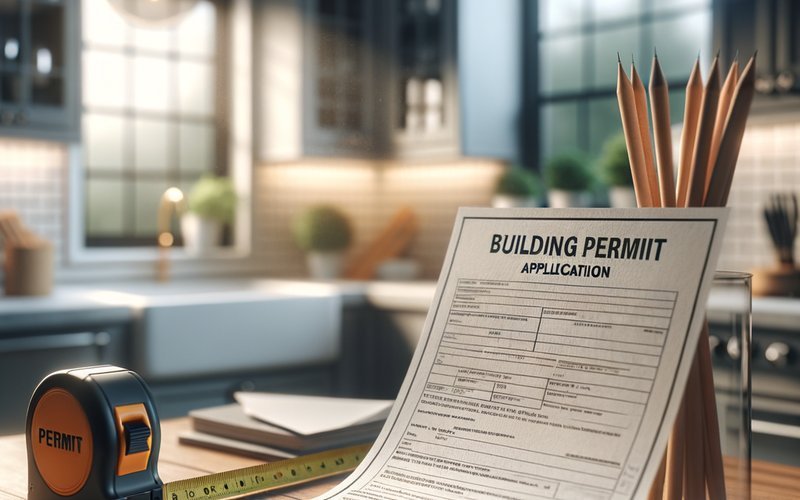
In Mountain View, permit requirements depend entirely on what you’re touching. The City of Mountain View’s Building and Safety Division, part of the Community Development Department, handles all residential permits for kitchen work.
A cosmetic refresh — cabinet refacing, countertop replacement, fixture swaps, backsplash tile, and painting — generally does not require a permit. You’re not touching the plumbing system, the electrical panel, or any structural element, so no inspection is triggered.
Any of the following will trigger a permit requirement:
- Rerouting plumbing supply lines or drain lines
- Upgrading or modifying the electrical panel or adding dedicated circuits
- Work on gas lines (range, oven, or range hood connections)
- Removing or modifying a load-bearing wall
- Changing the kitchen’s footprint as part of an addition
For kitchen-scope electrical and plumbing permits in Mountain View, permit fees typically run $800–$2,400 depending on valuation and scope. Over-the-counter submittals for straightforward residential kitchen permits usually process in 2–4 weeks. More complex projects involving structural work will require plan check and take longer.
Pulling permits protects you. Unpermitted plumbing or electrical work will surface during a home sale inspection and can either kill a deal or cost you at closing. Don’t skip it to save a few hundred dollars.
How Do Mountain View Home Values Affect Which Option Pays Off?
Mountain View median home prices in 2025 sit near $2.1–$2.4 million for single-family homes. That’s slightly below the Palo Alto range of $3 million and above, but it’s still a market where kitchen quality is heavily scrutinized by buyers.
The ROI math works differently at these price points. A refresh in a $2.2M home can return 150–200% of its cost at resale. Buyers at this price point are comparing your kitchen to the renovated homes they toured last weekend, and they will negotiate down hard if they see original 1980s laminate countertops and oak-finish cabinets. A $15,000 refresh can close a $25,000–$35,000 negotiation gap.
A full remodel typically returns 60–80% of cost at resale in this market. That number sounds lower, but it’s measuring a different thing. It doesn’t capture the daily livability value of cooking in a well-designed kitchen for 15 years. If you’re holding the home long-term, the ROI calculation isn’t just about resale — it’s about how you live.
Buyers in Waverly Park and the Cuesta Park neighborhood have high expectations. These are established, desirable Mountain View areas where competing inventory tends to show well. A dated galley in an otherwise updated home will stick out — and buyers will use it as leverage. Whether you refresh or remodel, doing nothing isn’t really a neutral option in this market.
What If Your Kitchen Project Is Part of a Larger Room Addition or ADU Plan?

This is where the two projects can work together powerfully. If you’re opening a kitchen wall to connect an addition, or if your ADU project in Mountain View changes the home’s footprint near the kitchen, bundling the kitchen remodel into the same permit can save you $3,000–$8,000 in separate permit fees. You also avoid double mobilization costs — bringing the same trades back for a second project weeks later adds meaningful expense in a tight labor market.
The logic is simple. If the wall is already open and the electrical and plumbing are already exposed, the incremental cost of addressing the kitchen layout at the same time is a fraction of what it would cost as a standalone project later. Contractors who work across both room additions in Mountain View and kitchen remodels will flag this opportunity during design — it’s one of the clearest ways to reduce total project cost.
For homeowners whose contractor network or project scope extends into neighboring communities, kitchen remodeling in Palo Alto follows similar permit bundling logic, and firms experienced in both cities understand how to schedule inspections efficiently across overlapping project timelines.
If you’re planning any kind of addition and the kitchen is anywhere near that work, have a conversation with your contractor before finalizing the scope. The savings are real.
How Do You Choose the Right Contractor for a Kitchen Project in Mountain View?

For a full kitchen remodel, you need a CSLB Class B general contractor license. That’s the license that covers structural work, subcontract coordination, and projects where multiple trades are involved. For electrical work, your contractor should use a licensed C-10 electrical subcontractor. For plumbing, a C-36 licensed plumber. Verify any license at CSLB.ca.gov before you sign anything.
For a refresh — cabinet refacing, countertops, and fixtures only — a Class C-6 cabinet contractor license may be sufficient, since no structural or mechanical work is involved. But confirm that with whoever you’re hiring, and make sure they’re not planning to touch any plumbing or electrical without the right license.
Get at least three bids. In Mountain View’s competitive contractor market, bids on a mid-range remodel can range from $50,000 to $85,000 for similar scope — that spread is real, and it often reflects differences in material allowances and subcontractor relationships rather than profit margins alone.
Watch for these red flags:
- A contractor who won’t pull permits (“we’ll keep it simple”) — this is a liability you inherit at resale
- An all-cash discount with no written contract
- A timeline under three weeks for a full remodel — it can’t be done right that fast
- No references from Mountain View or nearby projects in the past 18 months
Firms that regularly work in this part of the Bay Area understand Mountain View’s inspection cycles, know the Building and Safety Division’s current processing times, and can schedule trade work without delays caused by unfamiliarity with local requirements. That local knowledge is worth something on a $60,000–$90,000 project. Ask specifically whether they’ve pulled permits through Mountain View’s Community Development Department recently — the answer tells you a lot.
Ready to figure out which scope fits your home and your budget? King David Home Builders offers free on-site estimates for kitchen projects in Mountain View — get a contractor who knows the city, knows the costs, and can tell you exactly what your kitchen needs.