
Figuring out how long to build an ADU in Palo Alto is one of the first questions homeowners ask, and it’s usually followed by a long, frustrated pause when they realize how few clear answers exist online. So here it is, straight: most ADU projects in Palo Alto take between 8 and 18 months from first design meeting to move-in day. The range is wide because the type of ADU you’re building, the completeness of your permit submittal, and the availability of South Bay contractors all push that number in different directions. This guide breaks down every phase with real timelines so you can plan your calendar, not just hope for the best.
The Short Answer: Total ADU Timeline in Palo Alto
In Palo Alto, a complete ADU project runs 8 to 18 months from design kickoff to certificate of occupancy. Garage conversions land on the shorter end. Brand-new detached ADUs sit at the longer end, especially when South Bay labor demand is high and subcontractors are booked weeks out.
| ADU Type | Typical Total Timeline | Key Variable |
|---|---|---|
| Garage Conversion | 8–11 months | No foundation or framing from scratch |
| Attached Addition ADU | 10–14 months | Structural tie-in complexity |
| Detached New Construction | 13–18 months | Full permitting + site work + framing |
| Junior ADU (JADU) | 6–9 months | Interior work only, limited scope |
| Prefab/Modular ADU | 9–13 months | Site prep timing vs. factory lead times |
The biggest misconception is that permits take a few weeks. In Palo Alto, the City’s Planning and Development Services department processes ADU applications through an online portal, and a first-round review alone can take 4 to 8 weeks. If your plans have corrections, add another 2 to 4 weeks per round. That’s before a single shovel hits the ground.
Labor market conditions in the South Bay also matter more than most people expect. Palo Alto, Mountain View, and surrounding cities have a tight pool of licensed general contractors experienced with local building codes. Scheduling gaps between trades like plumbing, electrical, and HVAC can quietly add 2 to 6 weeks to your construction phase without anyone making a mistake.
Phase 1: Design and Plan Preparation (4–10 Weeks)
Before Palo Alto’s building department sees anything, you need construction-ready drawings. This phase typically runs 4 to 10 weeks depending on whether you’re using a custom architect, a design-build firm, or a preapproved plan set.
A site survey comes first. Your builder or architect needs accurate property boundary data, existing structure dimensions, and utility locations before drawing a single line. That survey usually takes 1 to 2 weeks to schedule and complete. Don’t skip it or rush it; errors caught here save weeks later.
Architect vs. Prefab Plans
Custom architectural drawings take longer but give you more design flexibility and are often better tailored to Palo Alto’s specific zoning rules, setback requirements, and aesthetic guidelines for established neighborhoods like Crescent Park or Old Palo Alto. Expect 6 to 10 weeks for full custom plans.
Prefab or preapproved plan sets move faster, sometimes as quick as 2 to 4 weeks for customization. Nearby Mountain View has a Preapproved ADU Program that lets homeowners select from pre-vetted designs, which can shave weeks off plan preparation. Palo Alto doesn’t have an identical program, but experienced local builders often have plan templates that reduce the design-to-submittal window.
By the end of Phase 1, you need complete architectural, structural, electrical, plumbing, and mechanical drawings ready for plan check. Incomplete submittals are the number-one cause of delays in Phase 2, so getting everything right here is worth the extra week.
Phase 2: Palo Alto Permit Submission and Review (6–14 Weeks)

Palo Alto processes ADU permit applications through its online permit portal managed by Planning and Development Services at City Hall, 285 Hamilton Avenue. ADUs receive ministerial (by-right) review under California state law, which means the city can’t deny a compliant application based on neighborhood opposition or design taste. That’s good news. But it doesn’t make the process fast.
What the Review Process Actually Looks Like
After submittal, expect a first-round plan check response in 4 to 8 weeks. The city reviews for zoning compliance, setbacks, height limits, structural engineering, and code compliance across all trades. If corrections are required, you resubmit and wait another 2 to 4 weeks per round. Most projects need at least one correction cycle. Some need two.
Ministerial review applies to most standard ADUs. But if your project involves a historic property or an unusual variance, it can shift to discretionary review, which adds community notice periods and potential hearing timelines. That can add 2 to 4 months in edge cases. An experienced local builder will flag this risk before you submit, not after.
If you want to understand the full permit requirements before diving into plan preparation, this detailed breakdown of Palo Alto ADU permit requirements covers setback rules, owner-occupancy status, and what documentation the city actually wants to see in your submittal package.
Phase 3: Pre-Construction and Site Prep (2–4 Weeks)
Once your permit is issued, you’re not building yet. There’s a short but critical prep phase that runs 2 to 4 weeks, and skipping or compressing it creates problems mid-construction.
Utility coordination is the part most homeowners don’t think about. If your ADU needs a new electrical meter, a gas stub, or an upgraded water service, you’ll need to coordinate with PG&E and the City of Palo Alto Utilities. Scheduling those connections can add 1 to 3 weeks depending on utility workload, which fluctuates significantly in summer months.
If the project involves a garage conversion, demo of existing structures, or grading for a new detached build, that work happens here. A typical garage-to-ADU demo takes 3 to 5 days. Grading for a new foundation can run 1 to 2 weeks with inspection holds built in.
Subcontractor scheduling is another real-world delay point. Your general contractor will need to lock in framing, plumbing, electrical, and HVAC crews in sequence. In the South Bay labor market, top subcontractors are often booked 3 to 6 weeks out. A builder who’s established those relationships locally can pull teams together faster than someone working from a cold call list.
Phase 4: Construction Duration by ADU Type (3–9 Months)
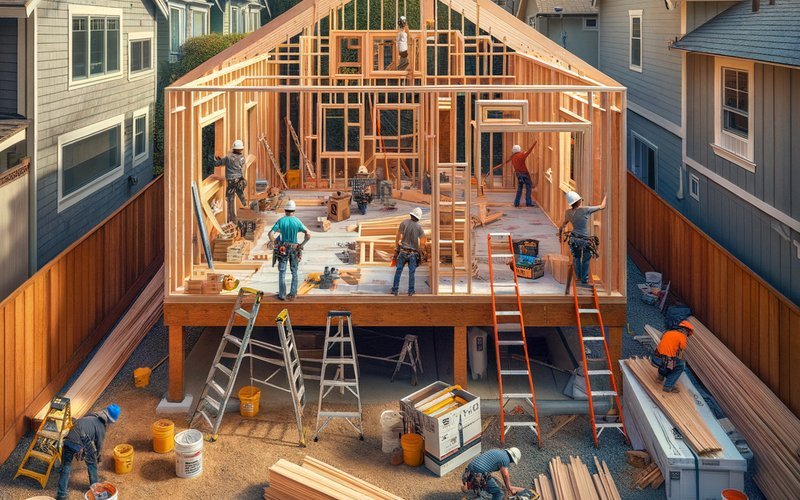
Active construction is where the timeline spread between ADU types becomes most visible. A garage conversion and a new detached ADU are practically different projects in terms of build time.
| ADU Type | Construction Duration | What Drives the Timeline |
|---|---|---|
| Garage Conversion | 3–4 months | No new foundation; mainly interior, electrical, insulation |
| Junior ADU (JADU) | 2–3 months | Interior only; smallest scope of work |
| Attached Addition ADU | 4–6 months | Foundation extension, structural tie-in, shared wall work |
| Detached New Construction | 6–9 months | Full foundation, framing, rough-ins, finishes from ground up |
| Prefab/Modular ADU | 4–6 months | Site prep + foundation while unit is built in factory; crane set day |
Garage Conversions: The Fastest Path
Garage conversions in Palo Alto are the fastest ADU to build because the shell is already there. You’re dealing with insulation, drywall, windows, flooring, a bathroom rough-in, and electrical upgrades. A well-run garage conversion can hit a certificate of occupancy in as little as 8 to 11 months total from design start.
Detached New Construction: Plan for the Long End
A new detached ADU in the back of a Palo Alto lot, say in a neighborhood like Midtown or Barron Park, starts with foundation excavation and goes through framing, roofing, rough mechanical, insulation, drywall, finish carpentry, tile, cabinets, fixtures, and exterior finishes before final inspection. That’s 6 to 9 months of active construction even when things go smoothly. If you’re also doing a room addition on the main house at the same time, coordinating both scopes adds scheduling complexity. A team that handles room additions in the Mountain View and Palo Alto area alongside ADU builds can manage both scopes more efficiently under one permit strategy.
Phase 5: Inspections, Final Sign-Off, and Certificate of Occupancy (2–6 Weeks)
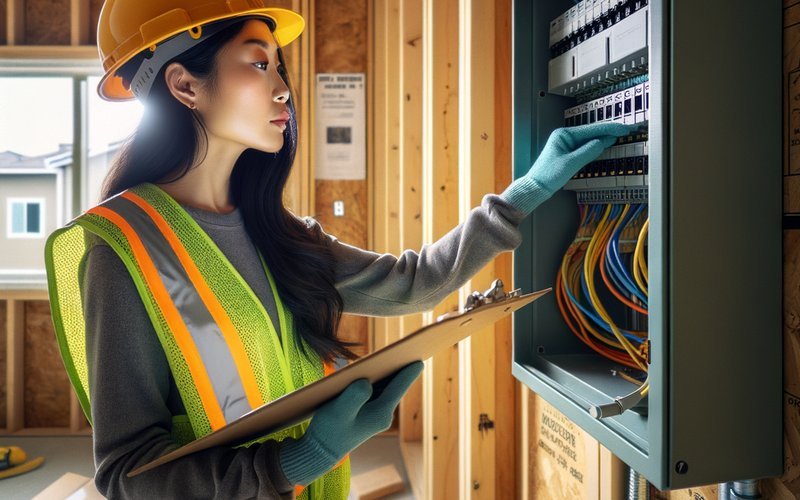
The final phase runs 2 to 6 weeks and involves a sequence of city inspections before Palo Alto’s Building Division issues your certificate of occupancy. You can’t skip steps or combine inspections that aren’t meant to be combined.
The typical inspection sequence for a new ADU looks like this:
- Foundation inspection (before concrete pour)
- Framing inspection (before insulation or drywall)
- Rough plumbing, electrical, and mechanical inspections
- Insulation inspection
- Drywall inspection (in some cases)
- Final building inspection covering all trades
- Utility meter release and activation
Scheduling inspections through Palo Alto’s online permit portal is straightforward, but getting a next-day appointment isn’t always possible. Inspectors are busy, and slots fill up. Budget 2 to 5 days of waiting time per inspection, and multiply that across 6 to 8 required visits. That time adds up fast.
The utility meter release is often the last step before someone can actually move in, and it requires a final sign-off from both the city and PG&E. That coordination can take 1 to 2 weeks on its own. Plan for it, don’t assume it happens automatically after the final inspection.
What Slows Down ADU Projects in Palo Alto (And How to Avoid It)

Most ADU delays in Palo Alto aren’t caused by complicated projects. They’re caused by predictable, avoidable mistakes. Here are the real culprits.
Incomplete Plan Submittals
Submitting plans before they’re truly ready is the single most common delay. If your electrical plans are missing a load calculation, or your structural drawings don’t show the hold-down hardware, the city will send you a correction notice and restart the clock. That’s a 4 to 6 week penalty for something that could have been caught by a thorough pre-submittal review. Work with a builder or architect who does a complete check before hitting submit.
Correction Cycle Stacking
One correction round is normal. Two is common. Three is a red flag. Each round costs you 2 to 4 weeks. If you’re seeing repeated corrections on the same plans, it usually means the original design had fundamental issues that a stronger design professional would have caught earlier. It’s genuinely worth paying a bit more for someone who knows Palo Alto’s plan check preferences.
Contractor Scheduling Gaps
In the South Bay, the gap between “permit issued” and “construction starts” is often longer than homeowners expect. If your contractor is juggling multiple projects, or if a key subcontractor falls through, you can lose 4 to 8 weeks before a crew is even on site. Ask your contractor directly: what’s the current lead time from permit issuance to construction start? You want a real answer, not a shrug.
And honestly, the best way to compress the overall timeline is to hire a builder who has already run this exact process in Palo Alto multiple times. They know which plan check comments to expect, which inspectors have scheduling quirks, and how to keep subcontractors moving in sequence.
Choosing the Right ADU Builder Speeds Up Every Phase
A permit-savvy builder doesn’t just do better work. They do faster work, because they’ve already solved the problems you haven’t encountered yet. In Palo Alto specifically, that means knowing the Building Division’s review priorities, submitting plans that pass first-round checks, and having relationships with the sub trades needed to keep construction moving without gaps.
If you’re comparing builders, ask how many ADU permits they’ve pulled in Palo Alto in the last 24 months. Ask to see their average time from submittal to permit issuance. Those numbers tell you more than any sales pitch. A builder who’s done five ADUs in the city in the past year has lived through the current permitting environment. Someone who did one four years ago is essentially starting over.
Working with an experienced adu builder palo alto who serves the broader South Bay region, including Mountain View homeowners looking to build on Palo Alto-adjacent lots, gives you a team that knows not just the construction side but the permit navigation, utility coordination, and inspection sequencing that separates a smooth project from a frustrating one.
If you’re still in the early comparison phase, it helps to understand what the full cost picture looks like alongside the timeline. The breakdown of ADU costs in Palo Alto for 2025 covers what you’ll actually spend on each type, which pairs naturally with the timeline planning in this guide.
For Mountain View homeowners working with builders who operate across both cities, the process and timelines are closely comparable. The ADU Builders in Mountain View page has city-specific details worth reviewing if your project sits on the Mountain View side of the border.
Frequently Asked Questions
How long does it take to get an ADU permit in Palo Alto?
In Palo Alto, getting an ADU permit takes 6 to 14 weeks from initial submittal to permit issuance. The city’s Planning and Development Services department conducts a first-round plan check in 4 to 8 weeks. If corrections are required, each additional review round adds 2 to 4 weeks. Most ADU applications go through at least one correction cycle, so budgeting 10 to 12 weeks for permitting is a realistic baseline for compliant projects.
What is the fastest ADU type to build in Palo Alto?
A Junior ADU (JADU) is the fastest to build in Palo Alto, with a total project timeline of 6 to 9 months from design to move-in. JADUs are interior conversions of existing living space, so they don’t require new foundations, exterior framing, or major utility extensions. Garage conversions are the next fastest, typically completing in 8 to 11 months total.
How many inspection visits does a Palo Alto ADU require?
A typical new detached ADU in Palo Alto requires 6 to 9 city inspection visits throughout construction. These include foundation, framing, rough plumbing, rough electrical, rough mechanical, insulation, and a final inspection covering all trades. Garage conversions and JADUs may require fewer visits, typically 4 to 6 inspections, because the scope of structural work is more limited.
Can I live in my home while my ADU is being built?
Yes, in most cases you can live in your primary residence while an ADU is being constructed in Palo Alto. Detached ADUs and garage conversions typically allow normal home occupancy throughout construction. Attached addition ADUs may create temporary disruptions to utility service, shared walls, or access routes, but full displacement is rarely required. Discuss the construction sequence with your contractor before work begins to understand what to expect.
Does Palo Alto allow prefab or modular ADUs to speed up construction?
Palo Alto does allow prefab and modular ADUs, and they can reduce active construction time to 4 to 6 months on site because the unit is built in a factory while site prep and foundation work happen simultaneously. However, the total timeline from design to move-in still runs 9 to 13 months because permitting timelines are the same regardless of construction method. Factory lead times for modular units also average 8 to 16 weeks, which must be coordinated carefully with site readiness.
How do ADU timelines in Palo Alto compare to Mountain View or Sunnyvale?
ADU timelines in Palo Alto, Mountain View, and Sunnyvale are broadly similar, ranging from 8 to 18 months total depending on ADU type. Mountain View offers a Preapproved ADU Program that can shorten the design and plan-check phase by 4 to 6 weeks for eligible plan sets. Sunnyvale uses an online permit portal similar to Palo Alto’s, with comparable first-round review windows of 4 to 8 weeks. All three cities fall under the same California state ADU law requiring ministerial review, so no city can legally add discretionary delays for standard compliant projects.