
Homeowners researching a detached adu vs garage conversion palo alto quickly discover this isn’t just a style preference—it’s a lot-first decision that depends on your setbacks, coverage limits, existing footprint, and what you actually want to earn from the unit. Both options are viable in Palo Alto’s R-1 zones, but one will almost always be a better fit for your specific parcel. This guide breaks down the real costs, permit timelines, and rental income data so you can make the call with confidence.
The Core Difference: What Each ADU Type Actually Involves
A detached ADU is a brand-new standalone structure built on your lot, separate from the main house. A garage conversion takes your existing attached or detached garage and repurposes it as a living unit. Same goal, completely different scope of work.
With a detached ADU, you’re breaking ground on a new foundation, framing new walls, running new utilities from scratch, and building a roof. It’s essentially a small custom home. In Palo Alto, these units typically run between 600 and 1,200 square feet and need to clear setback, height, and lot coverage rules before a shovel touches the ground.
A garage conversion is a repurposing project. You’re working inside an existing shell, which means foundation, framing, and roof are mostly there already. What you’re adding is insulation, drywall, electrical upgrades, plumbing for a bathroom and kitchen, HVAC, and all the finishes. The footprint is fixed by the garage size, which in most Palo Alto neighborhoods means 400 to 600 square feet for a single-car and 500 to 800 square feet for a two-car.
So the tradeoff is clear. Detached gives you more flexibility on size and layout. A conversion gives you a faster, cheaper path to a rentable unit. Which one wins depends entirely on your lot.
Palo Alto Lot Size and R-1 Zoning: How Your Property Decides the Winner
In Palo Alto, R-1 zoning rules govern the vast majority of single-family lots, and those rules directly shape which ADU type is even possible. The city follows California state ADU law as a baseline, but Palo Alto layers on additional standards you need to understand before designing anything.
For detached ADUs, rear and side setbacks of 4 feet minimum apply under California’s streamlined standards, but Palo Alto’s lot coverage limits often become the real constraint. Most R-1 lots cap total lot coverage at 40 percent of lot area. If your main house already covers a large share of that, a new detached structure might push you over the limit before you’ve even sized the unit properly.
Garage conversions sidestep the coverage problem. Since you’re converting existing covered space, you’re not adding new coverage to the lot. This makes conversions far more viable on smaller lots, typically those under 6,000 square feet. And Palo Alto has plenty of those, especially in neighborhoods like Barron Park and parts of Midtown where postwar tract homes sit on snug parcels.
If your lot is larger, say 8,000 square feet or more, a detached ADU becomes much more realistic. You have the room to hit setbacks, stay within coverage limits, and still build a unit with enough square footage to command strong rents. Neighborhoods like College Terrace, Old Palo Alto, and parts of Professorville often have the lot depth to make this work.
One more thing to check: if your garage is attached to the main house and sits close to a side property line, a conversion might still face setback issues if you’re adding square footage or a second story. Pull your site plan early and verify with the Palo Alto Planning and Community Environment Department before committing to either path.
Side-by-Side Cost Breakdown: Detached ADU vs. Garage Conversion in Palo Alto

Here’s the honest answer on cost. A detached ADU in Palo Alto will run you $280,000 to $420,000 for a typical 600 to 900 square foot unit. A garage conversion lands in the $90,000 to $175,000 range for the same market. That’s a massive gap, and it’s real.
| Criteria | Detached ADU | Garage Conversion |
|---|---|---|
| Total Cost Range | $280,000 – $420,000 | $90,000 – $175,000 |
| Typical Size | 600 – 1,200 sq ft | 400 – 800 sq ft |
| Permit Fees (Palo Alto) | $8,000 – $18,000 | $3,500 – $7,000 |
| Construction Timeline | 9 – 14 months | 4 – 7 months |
| Utility Connection Costs | $15,000 – $35,000 | $5,000 – $15,000 |
| Soft Costs (Design, Engineering) | $20,000 – $45,000 | $8,000 – $18,000 |
| Best For | Larger lots, max rental income, long-term asset value | Smaller lots, faster ROI, lower upfront risk |
| Main Risk | Coverage limits, higher carrying costs during construction | Limited square footage, no parking replacement required |
The utility connection cost difference is where a lot of homeowners get surprised. A detached ADU needs a full new electrical service, a separate water and sewer lateral, and often a new gas line run. That work alone can cost $20,000 to $35,000 depending on how far the new structure sits from your main panel and street connections. A garage conversion can typically tap into existing service runs, keeping that number much lower.
Design and engineering costs are also higher for detached builds. You’re producing full architectural plans, structural calculations, Title 24 energy compliance reports, and potentially a soils report. For a conversion, a lot of that documentation is simpler because the shell already exists. A homeowner in Midtown Palo Alto recently got her garage conversion through plan check for around $12,000 in total soft costs. A comparable detached build on a nearby street ran over $38,000 just in design and engineering fees.
Rental Income Potential: Which Type Earns More in the Palo Alto Market?
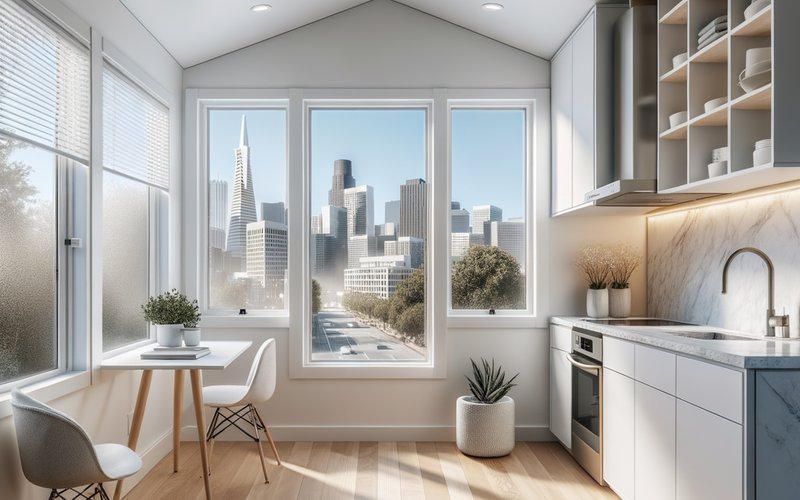
Detached ADUs command higher rents in Palo Alto, no question. A well-finished detached unit with its own yard access and private entrance will typically rent for $3,200 to $4,500 per month depending on size, finishes, and location. Garage conversions, because they’re smaller and often feel more like an apartment than a house, tend to rent in the $2,400 to $3,200 per month range.
But the ROI math is more nuanced than just comparing rent numbers. A garage conversion at $2,800 per month with a total investment of $130,000 pays back its cost in roughly 46 months (about 4 years) before financing costs. A detached ADU earning $3,800 per month on a $360,000 investment takes closer to 95 months, nearly 8 years, to break even on construction alone.
So if your goal is faster cash flow and lower financial risk, the conversion wins on ROI. If you’re building long-term asset value or planning to eventually sell the property with the ADU priced into the home value, the detached unit typically adds more to your appraisal. In the Palo Alto market, a quality detached ADU can add $300,000 to $450,000 to property value in some neighborhoods, compared to $150,000 to $250,000 for a garage conversion.
Permit Process Differences at the Palo Alto Planning Department

Garage conversions move through the Palo Alto Planning and Community Environment Department faster than detached ADUs, often by several months. In Palo Alto, a garage conversion submittal typically reaches approval in 6 to 10 weeks under the city’s over-the-counter or expedited review track. A detached ADU plan check usually takes 3 to 5 months for initial review, with correction cycles adding more time.
For a detached ADU, your submittal package needs to include full architectural drawings with floor plans, elevations, and sections; a site plan showing setbacks and lot coverage calculations; Title 24 energy compliance; and structural engineering if you’re using non-standard framing. Depending on the site, you may also need a geotechnical report.
A garage conversion submittal is leaner. You’ll need floor plans showing the new layout, details on how you’re meeting minimum ceiling height (Palo Alto requires 7 feet 6 inches minimum for habitable space), egress window compliance, and documentation of the bathroom and kitchen rough-in. It’s still a real permit process, but the documentation burden is lower.
One thing that trips people up on both types: Palo Alto requires an owner-occupancy declaration for ADU projects in some cases, and the city does verify compliance. Make sure you understand the current owner-occupancy rules before you start. Our detailed breakdown of Palo Alto ADU permit requirements covers the current standards for 2025 in full.
Which Lots in Palo Alto Actually Qualify for Each Option?
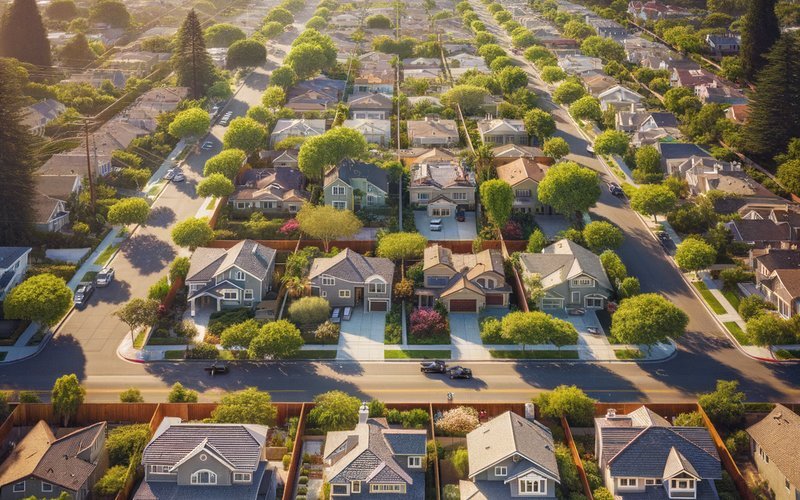
Not every lot qualifies for both options, and some lots strongly favor one path over the other based on physical constraints.
Eichler Lots and Smaller Parcels
Eichler neighborhoods in Palo Alto, including parts of Green Gables and Fairmeadow, tend to have 6,000 to 7,500 square foot lots with attached garages and relatively shallow rear yards. On these lots, a detached ADU often can’t clear coverage limits without displacing the garage entirely. A garage conversion is usually the only viable ADU path, and it actually works well because Eichler garages are typically large single-car or small two-car designs that convert cleanly to a studio or one-bedroom layout.
Larger Lots in College Terrace and Old Palo Alto
Lots in College Terrace, Old Palo Alto, and Crescent Park that run 8,500 square feet and up give you room to work with. A detached ADU in the rear yard is genuinely viable here, especially on lots with long rear setback depth. These are the projects where spending $350,000 on a detached unit makes the most financial sense because the rental income ceiling is higher and the property value upside is real.
Garage Setback Conflicts
One problem that comes up frequently: garages built decades ago sometimes sit right on or near the property line, especially on corner lots. Converting a nonconforming structure to habitable space can trigger zoning review. If your detached garage is less than 4 feet from a side or rear property line, check with the Planning Department before assuming the conversion is straightforward.
How to Choose the Right ADU Builder in Palo Alto for Your Project
Choosing the right builder matters more than most homeowners realize, and the detached ADU vs. garage conversion decision affects who you should hire. Not every contractor has experience with both types, and experience with Palo Alto’s specific permit process is a genuine differentiator.
For a garage conversion, you want a builder who has completed Palo Alto conversions recently, understands the city’s habitability standards, and knows how to handle the structural upgrades that older garages often need. Ceiling height upgrades, foundation reinforcement, and fire separation from the main house are common issues. A builder who’s done this before won’t get surprised mid-project.
For a detached ADU, you need someone who’s navigated Palo Alto’s plan check process from start to finish, ideally multiple times. The correction cycles, the energy compliance documentation, the utility coordination with PG&E and the city’s Public Works department, these are things an experienced builder handles without drama. An inexperienced one can add 3 to 6 months to your timeline just through avoidable submittal errors.
Working with a professional adu builder palo alto who handles both types means you get an honest assessment of which path actually fits your lot before you’ve spent money on design. That early guidance is worth a lot. You might also find that a room addition in Palo Alto is worth comparing against both ADU options if your goal is adding living space rather than a separate rental unit.
Ask any builder you’re considering these questions before signing anything:
- How many ADU projects have you completed in Palo Alto specifically, and can you share permit records or references?
- Do you handle the full permit process in-house, or do you outsource plan check coordination to a third party?
- What’s your track record on first-round plan check approvals in Palo Alto?
- Have you worked on both detached builds and garage conversions, and which do you think fits my specific lot?
- What’s your contingency process if the city requires corrections or additional studies?
Honestly, most builders can frame a wall. What you’re really paying for is local knowledge, and in Palo Alto, that knowledge directly affects your timeline, your permit costs, and your final budget.
Frequently Asked Questions
Can I build a detached ADU on a small R-1 lot in Palo Alto?
In Palo Alto, you can build a detached ADU on an R-1 lot, but smaller lots under 6,000 square feet often face lot coverage constraints that limit the unit’s viability. California state law allows ADUs up to 800 square feet regardless of lot coverage rules, but the physical space for a rear-yard unit with proper setbacks can be tight. A site evaluation by the Palo Alto Planning and Community Environment Department or a qualified ADU builder is the best way to assess whether your specific parcel can support a detached build.
How much does a garage conversion ADU cost in Palo Alto in 2025?
A garage conversion ADU in Palo Alto costs between $90,000 and $175,000 in 2025, depending on the garage size, existing condition, and finish level. A basic single-car conversion with standard finishes typically runs $90,000 to $120,000. A two-car conversion with upgraded kitchen, tiled bath, mini-split HVAC, and quality flooring can reach $150,000 to $175,000. Permit fees from the city generally add $3,500 to $7,000 on top of construction costs.
Does converting a garage to an ADU require replacing lost parking in Palo Alto?
No. In Palo Alto, California state ADU law exempts garage conversions from parking replacement requirements. When you convert a garage to an ADU, you’re not required to provide substitute off-street parking for the lost garage spaces. This exemption applies citywide under AB 2221 and SB 9 provisions that Palo Alto has incorporated into its local ADU ordinance. You can proceed with a conversion without building a new carport or garage to compensate.
Which ADU type gets approved faster by the Palo Alto Planning and Community Environment Department?
Garage conversion ADUs are approved faster in Palo Alto. A garage conversion submittal typically receives planning and building approval in 6 to 10 weeks under the city’s current review track. A detached ADU plan check takes 3 to 5 months for initial review, and correction cycles can add another 4 to 8 weeks. Total permit-to-approval time for a detached ADU in Palo Alto commonly runs 5 to 8 months, compared to 2 to 4 months for a conversion.
What rental income can I expect from a garage conversion ADU in Palo Alto?
A garage conversion ADU in Palo Alto rents for $2,400 to $3,200 per month in the current market, depending on size, finishes, and proximity to Stanford and downtown. One-bedroom units converted from two-car garages with updated kitchens and private entrances tend to reach the upper end of that range. Studios converted from single-car garages typically rent in the $2,400 to $2,700 range. Given average conversion costs, most garage ADUs in Palo Alto reach payback on construction investment within 4 to 5 years.
Do I need a licensed ADU builder for a garage conversion in Palo Alto, or can I use a general contractor?
In Palo Alto, a garage conversion ADU requires permits and licensed contractors for all electrical, plumbing, and structural work, as required by California state law and Palo Alto’s Municipal Code. A licensed general contractor with Class B licensure can oversee the project and pull the necessary permits. However, using a builder with specific ADU and garage conversion experience in Palo Alto is strongly recommended. Builders unfamiliar with local habitability standards, fire separation requirements, and the city’s plan check process frequently encounter costly corrections and delays.