
The Real Question San Jose Buyers Face in 2025
The decision around building vs buying a home in San Jose isn’t just a financial question in 2025. It’s a logistical puzzle shaped by one of the tightest housing markets in the country.
San Jose’s active inventory has hovered near record lows for the past two years. When a decent resale home hits the market in Willow Glen or Almaden Valley, it gets multiple offers within days. That pressure pushes a lot of buyers toward a different question: “What if we just build?” But building in San Jose comes with its own set of complications, starting with finding a lot.
The math changed in 2024 and 2025. Rising construction costs, longer permit timelines through the City of San Jose’s Department of Planning, Building and Code Enforcement (PBCE), and shrinking lot availability mean neither path is obviously “right.” What matters is your timeline, your budget buffer, and how long you plan to stay.
So before you commit to either path, here’s what you actually need to know about costs, timelines, and the local realities that most real estate articles skip right over.
What It Actually Costs: Building vs. Buying in San Jose

In San Jose, the median resale home price in early 2025 sits around $1.3 million to $1.5 million for a single-family home, depending on the neighborhood. Building new costs more per square foot but gives you a different kind of control over what you get.
| Path | Estimated Cost (2025) | Pros | Cons | Best For |
|---|---|---|---|---|
| Buy Existing Home | $1.3M–$1.5M median in San Jose | Faster close, known condition, established area | Bidding wars, deferred maintenance, limited inventory | Buyers needing to move within 6 months |
| Build Custom Home | $550–$750/sq ft hard construction costs + land | Exactly what you want, modern systems, potential ADU | Long timeline, financing complexity, lot scarcity | Long-term residents, equity builders, large families |
| Teardown + Rebuild | $200K–$450K for teardown + new build costs | Existing lot, known location, address retained | Demo costs, permit delays, neighbor disputes | Buyers who find undervalued lots in good locations |
For a 2,000 sq ft custom home in Santa Clara, you’re realistically looking at $1.1M–$1.5M in construction costs alone before land. Add a lot in a desirable neighborhood and total project costs can reach $2.2M–$2.8M. That sounds alarming, but the resale value of a brand-new custom home in the same area often justifies it.
The hidden cost gaps matter too. Existing homes can carry deferred maintenance that doesn’t show up in the listing price: aging HVAC systems, outdated electrical panels, or foundation issues common in older Berryessa or East San Jose homes. New builds carry their own surprises, like design change orders and permit fee escalations through Santa Clara County.
Timeline Comparison: How Long Does Each Path Take?
Speed is one of the biggest practical differences between these two paths. Buying a resale home typically closes in 30–45 days. Building a custom home in San Jose takes 18–36 months from lot purchase to certificate of occupancy.
| Stage | Buying Existing Home | Building Custom Home |
|---|---|---|
| Property Search / Lot Search | 2–8 weeks | 3–12 months for lot acquisition |
| Offer / Design Phase | 1–2 weeks | 4–8 months (architectural plans, engineering) |
| Inspection / Permit Review | 2–3 weeks | 4–10 months (PBCE review, corrections, approvals) |
| Closing / Construction | 30–45 days total | 10–14 months active construction |
| Move-In Ready | 45–75 days from offer | 18–36 months from lot purchase |
Permit delays are real. San Jose’s PBCE office has processing times that have stretched to 6–10 months for full plan check review on new single-family construction. If your plans need corrections, add another 2–4 months. Hiring a builder with deep local permit experience shaves significant time off that window.
The City of San Jose also rolled out some over-the-counter permit options for smaller projects, but ground-up custom homes still go through the full review cycle. If you’re financing through a construction loan, your lender’s draw schedule is tied to permit milestones, so delays have a real dollar cost in carrying interest.
San Jose Lot Availability: The Factor Most People Underestimate
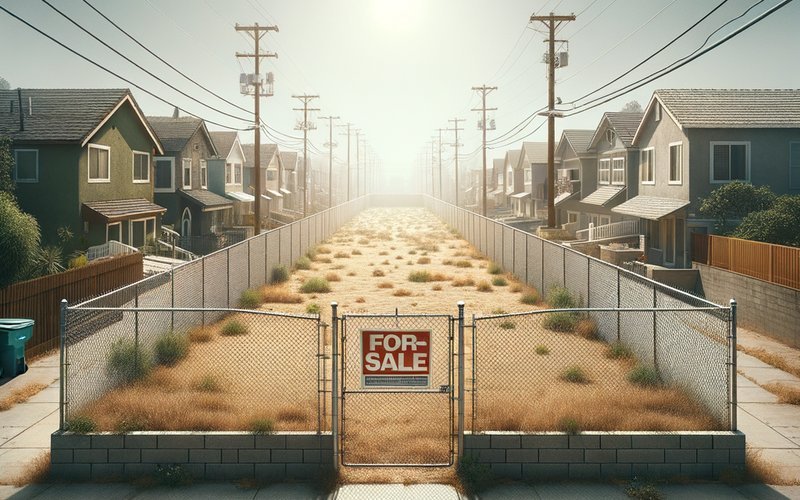
Finding a vacant lot to build on in San Jose is genuinely hard. The city is largely built out, and infill lots in desirable areas like Willow Glen, Naglee Park, or Rose Garden are rare, expensive, and often tied up in estate situations or zoning complications.
Santa Clara County’s zoning rules add another layer. Many parcels that look buildable on paper have setback requirements, height limits, or access easements that restrict what you can actually put there. A lot listed for $600K–$900K in a good San Jose zip code might only support a 1,400 sq ft structure due to FAR (floor area ratio) restrictions.
Teardown vs. Vacant Lot
The more realistic path for most San Jose builders is buying an older, smaller home and tearing it down. You’ll pay $80,000–$150,000 for demolition and site prep on top of the purchase price, but you get a known location in an established neighborhood. A homeowner in Cambrian Park recently went this route, purchasing a 1950s ranch for $1.1M, spending $120K on demo, and building a 2,800 sq ft custom home. Total cost: around $2.6M. Comparable new construction nearby lists for $3M+.
Vacant lots do come up, especially near the edge of Santa Clara and in some North San Jose areas zoned for residential redevelopment. But expect competition. And always run a title search and zoning verification before making an offer on any lot.
When Building Makes More Financial Sense in San Jose
Building new makes the most financial sense when you’re playing a long game. If you plan to stay in your San Jose home for 10 years or more, the equity upside on a custom home often outpaces what you’d build buying a 1970s ranch and watching it age.
Custom specs matter too. You’re not compromising on a floor plan someone else designed in 1985. You get the primary suite where you want it, the kitchen layout that actually works for your family, and modern energy systems that lower your monthly bills. In a city where utility costs keep climbing, that’s real value.
And then there’s the ADU opportunity. Building new in San Jose gives you the chance to add an accessory dwelling unit as part of the original project, often at a lower incremental cost than adding it later. A well-designed 500–800 sq ft ADU in Santa Clara can generate $2,500–$3,800/month in rental income. Over 10 years, that’s $300,000–$450,000 in gross revenue. It changes the math significantly. For homeowners exploring this, working with experienced Santa Clara ADU builders who understand local zoning is a smart early step.
When Buying an Existing Home Wins
Buying an existing home wins on speed and certainty. If you need to be in a specific school district by September, or your lease is up in 60 days, building simply isn’t an option. The resale market, as competitive as it is, can still move fast when you’re ready to act.
The upfront risk profile is also lower. With a resale home, you can get a full inspection before you commit. You know exactly what you’re buying and roughly what it’ll cost to fix or update. With a new build, you’re committing to a project budget that can shift based on material costs, subcontractor availability, and design decisions you haven’t made yet.
Established neighborhoods carry value too. Mature trees, walkable streets, neighbors who’ve been there for 20 years, proximity to schools and parks that have proven records. You don’t get that in a new development. Some buyers put a real premium on that kind of community stability, and that’s a completely valid reason to choose resale over building.
Financing Differences You Need to Know
Financing a new build is fundamentally different from getting a traditional mortgage, and most buyers don’t realize this until they’re already deep into the process.
With a resale purchase, you get a standard mortgage: one closing, one loan, a fixed monthly payment starting 30 days after close. With a new build, you need a construction loan. These loans are typically short-term (12–18 months), carry higher interest rates (currently 7.5%–9.5% in the Bay Area), and release funds in draws tied to construction milestones rather than all at once.
How Draw Schedules Work
A draw schedule means your lender sends money to your builder in stages: foundation complete, framing complete, rough-in complete, and so on. You only pay interest on the drawn amount, not the full loan. But if your builder is slow or a permit delay pushes a milestone back, you’re still paying interest on existing draws while waiting for the next phase.
After construction is done, most borrowers convert to a permanent mortgage through a “construction-to-permanent” loan. Some lenders offer this as a single-close product, which saves on closing costs. Others require two closings, which adds $8,000–$15,000 in fees. Ask your lender upfront which structure they offer. Not all lenders in Santa Clara County are set up to handle construction loans, so you may need to work with a lender who specializes in them.
How Santa Clara and Palo Alto Fit Into Your Decision
If lot availability in San Jose feels impossible, don’t limit your search to city limits. Santa Clara (the city, not the county) has pockets of infill opportunity, particularly around the Central Expressway corridor and the northern neighborhoods near Lick Mill Park. Zoning there is generally more predictable than in older San Jose neighborhoods, and the permit process through the City of Santa Clara’s Building Division can move faster.
Palo Alto is a different story, with significantly higher land costs, but it’s worth mentioning because of the ADU opportunity. Palo Alto’s ADU-friendly policies and its high rental market make building a primary home with an attached ADU a particularly strong investment. A custom home builders in Palo Alto project that includes a well-designed ADU can produce rental income that effectively subsidizes your mortgage.
And if you already own in the area, a room addition in Santa Clara might solve your space problem without requiring you to buy or build at all. That’s the question most people skip asking before diving into a full new-build search.
Not Ready to Build From Scratch? Consider These Middle-Ground Options
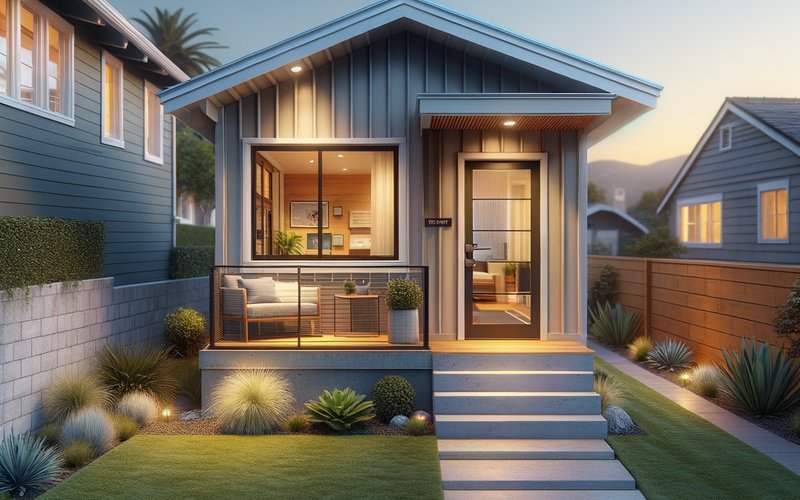
Building a new home is the right answer for some people and a terrible idea for others. If you already own in Santa Clara or San Jose, there are smarter middle-ground options worth seriously considering before you take on a full ground-up project.
A room addition is the most cost-effective way to get more space. In Santa Clara, a 400–600 sq ft addition typically costs $250,000–$420,000, including permits and finishes. That’s a fraction of what you’d spend building or buying new, and you keep your existing mortgage rate, which matters a lot in a 7%+ rate environment.
An ADU adds both space and long-term asset value. California’s ADU laws have made it dramatically easier to permit and build accessory units, and Santa Clara has followed the state’s streamlined approval process. A Santa Clara ADU can serve as a guest suite, in-law unit, or rental, and it increases your home’s appraised value by roughly $300,000–$600,000 in this market.
A kitchen remodel in Santa Clara is worth considering if you’re buying a fixer with a dated kitchen. A full kitchen renovation in this area runs $65,000–$130,000 and can add significant resale value while making the home livable on your terms. It’s not glamorous, but it’s often the highest-ROI move for buyers who stretch to get into a neighborhood they love.
How to Find the Right Builder for Your San Jose Project

If you’re leaning toward building, choosing the right contractor is the most important decision you’ll make, and it’s one where vetting matters more than price.
When evaluating builders for a building vs buying a home in San Jose project, focus on three things: local permit experience, completed project portfolio, and subcontractor relationships. A builder who’s navigated San Jose’s PBCE process dozens of times will save you months compared to one who’s learning the system on your project. Ask specifically how many projects they’ve permitted in Santa Clara County in the last three years.
Check references from past clients in the same city, not just the same region. San Jose’s permit office, zoning rules, and inspection processes differ from Santa Clara’s or Sunnyvale’s. Local experience isn’t a nice-to-have; it’s directly tied to your timeline and your budget.
For homeowners starting to explore home builders san jose options, looking for firms with verified local portfolios in Santa Clara County and direct experience with both custom builds and ADU projects gives you the most flexibility as your plan evolves.
Get at least three bids, but don’t just compare bottom-line numbers. Compare what’s included in the scope, how contingencies are handled, and what the payment schedule looks like. A bid that comes in $80,000 lower but lacks a detailed scope of work is often how budget overruns start. Ask every builder: “What’s your process if we hit a permit delay?” How they answer tells you a lot.
Also ask about their experience with custom home building in Santa Clara specifically. The more projects a builder has completed in your target city, the fewer surprises you’ll face on inspection day.