
Building an ADU in Palo Alto isn’t a one-price-fits-all decision, and anyone quoting you a flat citywide number is skipping the part that actually matters. Understanding ADU cost Palo Alto by neighborhood is the real answer: costs range from $140,000 for a garage conversion to $580,000+ for a detached two-bedroom unit on a hillside lot, and where your lot sits in Palo Alto changes that number more than most homeowners expect. Palo Alto’s mix of flat R-1 neighborhoods, foothill parcels, and aging sewer infrastructure means two homes a mile apart can see a $60,000 cost swing on the same square footage. This guide breaks down real pricing by neighborhood, what drives the swings, and how to plan your budget accurately. Get a free estimate from a licensed Palo Alto ADU builder before you lock in a design.
How Much Does an ADU Cost in Palo Alto in 2026?
In Palo Alto, ADU costs in 2026 range from $140,000 for a basic garage conversion to $580,000 for a fully custom detached unit with premium finishes on a challenging lot. Most homeowners building a standard 600-800 sq ft detached ADU should budget $380,000 to $460,000, including design, permits, and site work.
These numbers reflect Palo Alto’s higher labor costs, stricter design review in some zones, and the fact that many lots require significant utility upgrades before construction even starts. A homeowner comparing quotes should expect per-square-foot pricing between $550 and $750, well above the statewide average because of local labor rates and material delivery costs in the Peninsula market.
| ADU Type | Size Range | Typical Cost in Palo Alto | Timeline |
|---|---|---|---|
| Garage Conversion | 350-500 sq ft | $140,000 – $220,000 | 4-6 months |
| Attached ADU | 500-700 sq ft | $260,000 – $360,000 | 6-9 months |
| Detached ADU (flat lot) | 600-800 sq ft | $340,000 – $460,000 | 8-11 months |
| Detached ADU (hillside lot) | 600-800 sq ft | $420,000 – $580,000 | 10-14 months |
Those ranges include foundation work, framing, electrical, plumbing, HVAC, finishes, and standard permit fees. What they don’t always include is the cost of tying into an old sewer lateral or grading a sloped backyard, which is exactly why neighborhood matters so much in this city.
What Drives ADU Costs Up or Down in Palo Alto?
Lot topography, sewer lateral condition, and design review requirements are the three biggest cost drivers for ADU construction in Palo Alto. A flat lot with modern utilities can save you $50,000-$80,000 compared to a sloped lot with a 1960s sewer connection.
Size matters too, obviously, but it’s not the whole story. A 500 sq ft unit on a flat, utility-ready lot in a straightforward zone can come in under budget while a smaller 400 sq ft unit on a steep foothill lot costs more because of retaining walls, extended utility trenching, and additional engineering review.
Here’s what actually moves the number on your specific project:
- Site access: Narrow side yards or lots with limited equipment access add labor hours and sometimes require hand-digging foundations.
- Existing utility capacity: Older homes often need a panel upgrade before an ADU can be powered, which can add $8,000-$15,000.
- Foundation type: Slab-on-grade is cheapest; raised foundations needed on sloped lots cost more in materials and labor.
- Design complexity: A simple rectangular footprint costs less per square foot than a custom design matching an existing historic home’s architecture.
- Finish level: Builder-grade finishes versus custom cabinetry and high-end fixtures can swing the budget by $40,000 or more.
Honestly, most contractors will tell you the biggest surprise cost isn’t the structure itself, it’s what’s underground. Soil conditions, old utility lines, and unexpected root systems from mature trees (common throughout Palo Alto’s older neighborhoods) show up during excavation and can add unplanned costs if they aren’t scoped ahead of time in a proper site assessment.
ADU Costs by Neighborhood: Crescent Park, Old Palo Alto, Barron Park, and Midtown
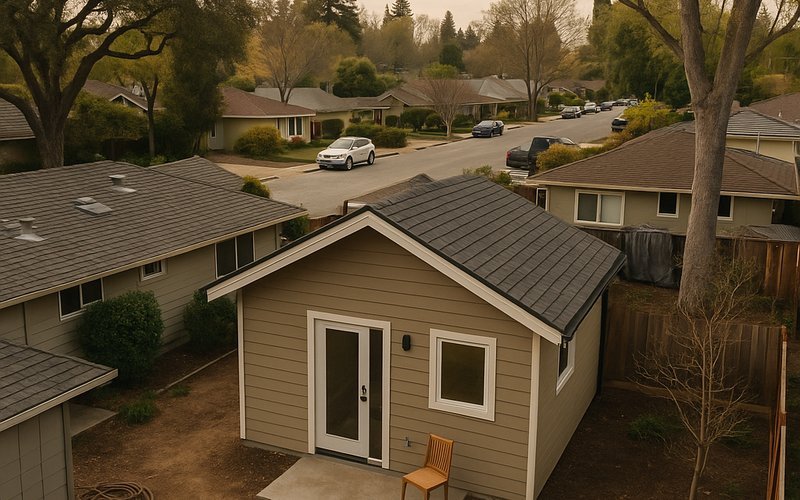
ADU costs vary by roughly $60,000-$90,000 across Palo Alto neighborhoods, driven mainly by lot size, tree canopy density, and sewer lateral age rather than by zoning differences alone. Midtown and Barron Park tend to run cheaper than Crescent Park and Old Palo Alto.
Crescent Park and Old Palo Alto feature larger, older estate-style lots with mature landscaping and, in many cases, original sewer laterals from the 1940s-1950s. That combination pushes costs toward the higher end, since builders often need root-cutting, lateral replacement, and careful excavation around protected trees.
Barron Park, with its smaller ranch-style lots and more consistent flat grading, tends to be one of the more budget-friendly areas for detached ADU construction in the city. Midtown sits in the middle: reasonably flat lots but a mix of utility ages depending on when each block was developed.
| Neighborhood | Typical Lot Type | Detached ADU Cost Range | Common Cost Add-Ons |
|---|---|---|---|
| Crescent Park | Large, flat, mature trees | $420,000 – $560,000 | Sewer lateral replacement, tree protection permits |
| Old Palo Alto | Large, flat, historic homes | $430,000 – $580,000 | Design review for architectural match, aging utilities |
| Barron Park | Smaller, flat, ranch-style | $340,000 – $440,000 | Minimal, standard utility work |
| Midtown | Moderate size, mostly flat | $360,000 – $460,000 | Variable sewer lateral condition |
A homeowner in Barron Park recently completed a 650 sq ft detached ADU for $368,000, finishing in just under 9 months because the flat lot and newer utility connections meant no lateral replacement was needed. That same footprint on a Crescent Park lot with an aging lateral and mature oak roots nearby would likely run $70,000-$90,000 higher for the utility and site work alone.
Flat R-1 Lots vs. Hillside Lots: Why Foothill Properties Cost More
Hillside and foothill-adjacent lots in Palo Alto cost significantly more to build on because of grading, retaining wall requirements, and drainage engineering that flat R-1 lots simply don’t need.
On a flat R-1 lot, a builder can typically pour a standard slab foundation and move straight into framing. On a sloped lot, you’re often looking at a stepped or raised foundation, engineered retaining walls, and a drainage plan that satisfies stormwater requirements before the city will sign off on grading.
That difference alone can add $30,000-$60,000 to a project. Add in the extra geotechnical reports often required for steeper lots, and you can see why foothill-adjacent properties near the southwestern edge of the city consistently price higher than flatland neighborhoods.
And it’s not just the extra concrete and steel. Equipment access on a slope is harder, which means more time, more labor hours, and sometimes smaller equipment that costs more to operate per hour. So if you’re comparing a quote for a flat lot against one for a sloped lot, don’t be surprised when the numbers aren’t close, even for the exact same floor plan.
Why Palo Alto’s Older Sewer Laterals Add to Your Utility Hookup Costs
Many homes in Palo Alto’s older neighborhoods still have original clay or cast-iron sewer laterals installed decades ago, and connecting a new ADU to a compromised lateral often triggers a full replacement requirement before the city will approve utility hookup.
A sewer lateral inspection is one of the first things a competent ADU builder should schedule, because a cracked or root-infiltrated line found mid-project causes expensive delays. Replacing a lateral typically costs $12,000-$25,000 depending on length and whether trenchless or open-trench methods are used.
Here’s the part most homeowners don’t think about: it’s not just about whether the lateral works today, it’s about whether it can handle the added flow from a second dwelling unit. Even a functioning older lateral may need upsizing to meet current capacity requirements once you add a full kitchen and bathroom to the property.
The City of Palo Alto’s Building Division reviews utility capacity as part of ADU permit approval, and fee schedules for these inspections and connections are published in the city’s Adopted Municipal Fee Schedule. Budgeting for a lateral inspection early, before you finalize your ADU design, is one of the cheapest insurance policies in the entire project.
Garage Conversion, Attached, or Detached ADU: Which Costs Less in Palo Alto?
Garage conversions are the cheapest ADU option in Palo Alto, typically costing $140,000-$220,000 because the structure, roof, and foundation already exist. Attached ADUs come in second, and detached units are the most expensive but offer the most design flexibility.
A garage conversion works best when your existing garage is structurally sound and large enough to meet minimum ADU square footage after insulation and framing work. You’re not paying for a new foundation or roof, which is where a huge chunk of ADU cost comes from.
Attached ADUs share a wall with the main house, which reduces some site work and utility trenching distance, but they usually require more structural modification to the existing home than people expect. Detached units cost the most because you’re building an entirely standalone structure from the ground up, but they also preserve your existing garage and give you full separation from the main house, which matters a lot to homeowners planning to rent the unit long-term.
So which is right for you? If your existing garage is usable and you want the fastest, cheapest path to a rentable unit, conversion wins. If you want maximum privacy and rental flexibility and you have the yard space, detached is worth the extra investment.
What Are the ADU Requirements in Palo Alto?
In Palo Alto, ADUs must meet setback, height, and size requirements set by the City of Palo Alto Planning and Development Services Department, with detached units capped at 850 sq ft for one-bedroom units and 1,000 sq ft for two-bedroom units under current state and local rules.
Key requirements homeowners need to plan around:
- Setbacks: Typically 4 feet from side and rear property lines for detached ADUs, though corner lots and hillside parcels may have additional review.
- Height limits: Detached ADUs are generally limited to 16-18 feet, with some flexibility for units near existing structures.
- Parking: Many Palo Alto ADUs are exempt from adding parking spaces if within a half-mile of transit, but this should be confirmed for your specific lot.
- Owner-occupancy: Current state law does not require owner-occupancy for most ADUs built under the standard permit path through 2026.
- Fire separation and utility connections: Reviewed directly by Palo Alto’s Building Division as part of plan check.
Permit review timelines in Palo Alto typically run 8-16 weeks depending on completeness of the submitted plans and whether the project needs additional review for design compatibility in certain zones. Working with a builder who has an established relationship with the Building Division tends to shorten this timeline considerably, since resubmittals for incomplete plans are the most common cause of delay.
What Is the $40,000 ADU Grant in California and Can Palo Alto Homeowners Use It?
The California ADU Grant Program offers up to $40,000 in reimbursement for pre-development costs like design, permitting, and soil testing, and Palo Alto homeowners who meet income eligibility requirements can apply through CalHFA.
The grant doesn’t cover construction costs directly. It’s meant to remove the upfront financial barrier that stops many homeowners from even starting the design and permitting process, which can run $15,000-$40,000 before a single shovel hits the ground.
Eligibility is generally tied to household income limits set by the state, and funding availability changes year to year based on program allocation. Given how quickly funding rounds have closed in past years, homeowners serious about using this grant should apply early in the process, ideally before finalizing architectural plans, since some pre-development costs must be incurred after grant approval to qualify for reimbursement.
Why More Palo Alto Homeowners Are Choosing ADUs Over Room Additions
ADUs are increasingly preferred over room additions in Palo Alto because they add independently rentable square footage and long-term property value, while a room addition only expands the existing home’s footprint without creating a separate income-generating unit.
With Palo Alto’s land values among the highest in the state, homeowners are looking for ways to maximize return on every square foot they build. A room addition might cost $250-$400 per square foot and improve your living space, but it doesn’t generate rental income or provide flexible housing for aging parents or adult children.
An ADU, even at a higher total cost, often pencils out better long-term. A detached unit renting for $2,800-$3,600 a month in the current Palo Alto rental market can pay back its construction cost faster than most homeowners expect, especially compared to the return on a similarly priced kitchen remodel or room addition.
That said, the right choice depends on your goals. If you need more living space for your immediate family and don’t want to manage a rental, a room addition in Palo Alto might still make more sense. If you want flexibility, rental income, or multigenerational housing, the ADU almost always wins on long-term value.
How to Find the Right ADU Builder in Palo Alto
The right ADU builder in Palo Alto should carry an active California contractor’s license, have direct experience navigating the city’s Building Division review process, and be able to show completed ADU projects in neighborhoods with similar lot conditions to yours.
What should you actually look for? Start with these criteria:
- Local permit experience: Ask how many ADU permits they’ve pulled specifically through Palo Alto’s Building Division in the last two years.
- Sewer lateral knowledge: A builder who doesn’t ask about your lateral’s age and condition early isn’t scoping your project properly.
- Transparent, itemized quotes: Line-item pricing that separates site work, utilities, structure, and finishes, not a single lump-sum number.
- References from similar lots: A flat-lot builder isn’t necessarily equipped for a hillside project, and vice versa.
- Realistic timelines: Anyone promising a detached ADU in under 5 months in this city is either cutting corners or hasn’t done one here before.
If you’d like an accurate quote for your specific lot, King David Home Builder’s ADU team in Palo Alto can walk your property, check your sewer lateral condition, and give you a real number instead of a citywide average that doesn’t reflect your actual site conditions.
Choosing the right builder matters even more in a city like Palo Alto, where design review, utility age, and lot topography all interact to shape your final cost. A builder who’s pulled permits in Crescent Park, worked around mature root systems in Old Palo Alto, and handled flat-lot conversions in Barron Park brings a level of local knowledge that a generic contractor simply can’t match. Get your lot assessed, get a real itemized quote, and start your ADU project with numbers you can actually trust.