
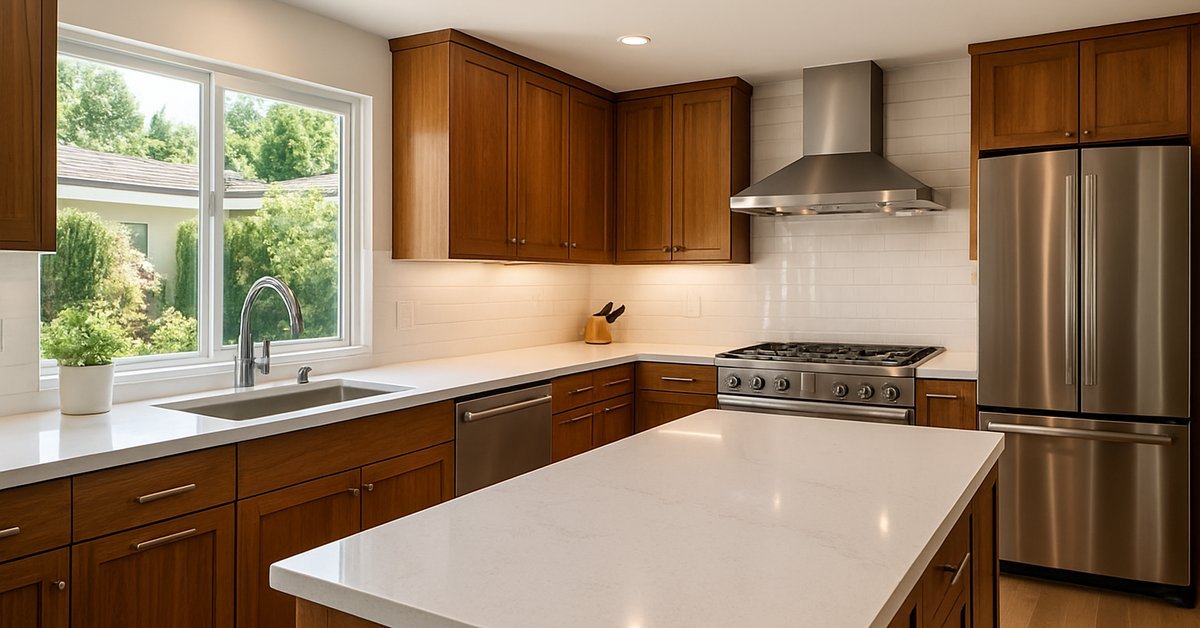
Planning a kitchen remodel in Palo Alto is not like planning one anywhere else in California, which is why even experienced custom home builders treat these projects differently than work done in other parts of the state. Costs run higher, older homes carry hidden surprises, and permits are not optional. Most mid-range Palo Alto kitchen projects land between $65,000–$95,000, and that number climbs fast once you factor in the Bay Area‘s labor premium and the realities of pre-1970 construction. This guide covers real costs, permit requirements, neighborhood-specific challenges, and how to avoid the mistakes that turn a 10-week project into a 20-week one.
Ready to get a ballpark for your specific kitchen? Talk to a licensed Palo Alto contractor for a free estimate.
How Much Does a Kitchen Remodel Cost in Palo Alto in 2026?
In Palo Alto, kitchen remodel costs break into three clear tiers based on scope and material grade. The Bay Area labor market adds roughly 20–30% above national averages, so even a “budget” remodel here costs what a mid-range project would in most other markets.
| Remodel Tier | Typical Cost Range | What’s Included |
|---|---|---|
| Budget | $38,000–$55,000 | Semi-custom cabinets, laminate or entry-level quartz countertops, standard appliances, cosmetic updates only |
| Mid-Range | $65,000–$95,000 | Full cabinet replacement, quartz or stone countertops, mid-grade appliances, updated lighting, minor layout changes |
| High-End | $100,000–$135,000+ | Custom cabinetry, premium stone, luxury appliance packages, layout reconfiguration, structural changes |
What the table doesn’t show is what’s hiding inside the walls. Homes in College Terrace and Midtown that were built in the 1950s and 1960s frequently have electrical panels and plumbing that need full replacement before a single cabinet goes up. That work adds $8,000–$15,000 to projects where it wasn’t flagged in the original quote. Always ask your contractor for a pre-demo inspection before signing anything.
A homeowner in Midtown recently completed a full kitchen gut renovation on a 1961 ranch house. Their initial quote was $72,000. After opening the walls, they found aluminum branch wiring and galvanized supply lines. Final cost: $84,500. Not the contractor’s fault, but entirely avoidable with a proper scope assessment upfront.
If you’d like an accurate quote for your specific home, see what Palo Alto homeowners actually pay for kitchen remodels before committing to any number.
What Actually Drives Kitchen Remodel Costs in Palo Alto?
Four factors account for the majority of budget variance in Palo Alto kitchen projects: home age, layout changes, appliance grade, and countertop material. Understanding which of these applies to your home determines whether your project lands at $55,000 or $110,000.
Home Age and Hidden Infrastructure
Palo Alto has a large stock of mid-century homes, including the iconic Eichler neighborhoods in Green Gables, Fairmeadow, and Greenmeadow. These homes predate modern electrical and plumbing codes by decades. Radiant floor heating systems under slab foundations are common in Eichlers, and they’re easy to damage during demolition if your contractor doesn’t know what they’re looking at. That alone can add $4,000–$9,000 in remediation costs.
Knob-and-tube wiring, common in craftsman homes in Old Palo Alto, must be replaced when you’re adding new circuits for appliances. That’s not optional. It’s a code requirement that will show up in your permit inspection.
Layout Changes
Moving the sink four feet can add $3,000–$6,000 alone. Relocating gas lines, rerouting drain stacks, and patching concrete slab add up fast. A homeowner in Barron Park wanted to open their kitchen to the dining room and move the range to an island. That one decision added $14,000 to what started as a $68,000 project. Layout reconfiguration is the single biggest cost multiplier in any kitchen remodel.
Cabinets and Appliances
Cabinets typically represent 30–40% of total project cost. Semi-custom options run $15,000–$28,000 for a standard kitchen. Full custom cabinetry from a Peninsula supplier pushes $35,000–$55,000 and adds 6–10 weeks of lead time. Appliance packages range from $6,000 for mid-grade to $25,000+ for professional-grade ranges and integrated refrigeration. Your countertop choice matters too. Quartz runs $80–$130 per square foot installed. Natural stone like quartzite or marble runs $120–$200 per square foot and requires additional structural support in some layouts.
Do You Need a Permit for a Kitchen Remodel in Palo Alto?
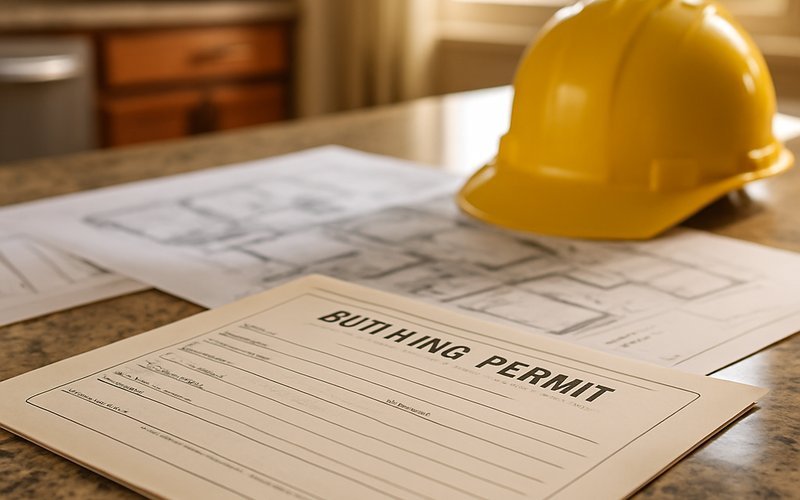
Yes, most kitchen remodels in Palo Alto require one or more permits. The City of Palo Alto Development Services Center handles all building, electrical, and plumbing permits. What triggers a permit is usually not the aesthetics, it’s the systems work underneath.
Scopes that require permits in Palo Alto include:
- Electrical panel upgrades or new circuit additions
- Gas line relocation or new gas connections
- Plumbing drain or supply line moves
- Structural wall removal or modification
- Any change to the building’s exterior envelope
Scopes that typically do not require permits include cabinet refacing, countertop swaps without plumbing moves, painting, flooring replacement, and light fixture swaps on existing circuits.
Permit fees at the Development Services Center typically run $500–$2,200 depending on project valuation. Plan-check review adds 4–8 weeks for standard permits and longer for projects involving structural work.
One important note for homeowners in Old Palo Alto and Crescent Park: homes in these areas may fall under additional design review requirements if proposed changes affect the exterior appearance of the structure. This is worth confirming with the Development Services Center before you finalize any plans. For a deeper look at what the permit process involves, this breakdown of Palo Alto kitchen remodel permit requirements covers the specifics.
Which Palo Alto Neighborhoods Have the Most Complex Kitchen Projects?
Not all Palo Alto kitchens are equally straightforward to remodel. Four neighborhoods consistently generate the most complex projects, and if you live in one of them, you should budget for surprises.
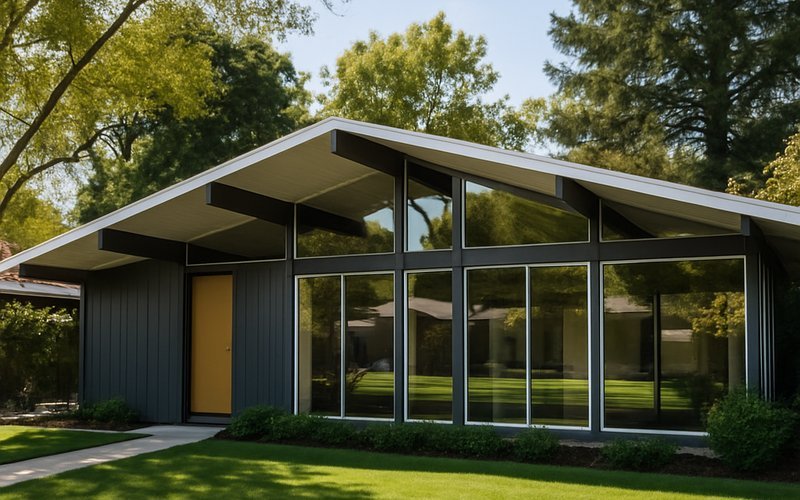
Green Gables is home to a significant concentration of Eichler homes. These post-and-beam structures have flat or low-slope roofs, open floor plans, and radiant heating embedded in concrete slabs. Standard cabinet installation assumes stud-framed walls. Eichlers don’t have them. Contractors unfamiliar with Eichler construction often underbid these projects by $10,000–$20,000. You need someone with specific experience.
Barron Park has a mix of Eichlers and mid-century ranches. Many have original electrical systems with amperage insufficient for modern kitchen loads. A 100-amp service panel upgrade to 200 amps runs $3,500–$6,500 and is often discovered mid-project.
Midtown has dense housing stock from the 1950s and 1960s. Galvanized plumbing, aluminum wiring, and original cast-iron drain systems are common here. Kitchens in Midtown homes often need full plumbing replacement before a remodel can proceed, which affects both cost and timeline significantly.
Old Palo Alto has beautiful craftsman and Tudor-era homes built before 1940. Knob-and-tube wiring, plaster walls, and non-standard ceiling heights create real complexity. These kitchens take longer, cost more, and require contractors who understand historic construction. They’re also some of the most rewarding kitchens to renovate when done right.
How Long Does a Kitchen Remodel Take in Palo Alto?
A realistic Palo Alto kitchen remodel takes 10–18 weeks from first design meeting to final inspection. That’s longer than most contractors will tell you upfront. Here’s what actually happens phase by phase.
| Phase | Typical Duration | Notes |
|---|---|---|
| Design and Planning | 2–4 weeks | Includes site measurements, material selections, and contractor review |
| Permit Submission and Review | 4–8 weeks | City of Palo Alto Development Services Center; longer if structural plans required |
| Demolition | 3–5 days | Faster for cosmetic remodels; longer if hazardous materials are found |
| Rough-In Work (electrical, plumbing, framing) | 1–3 weeks | Depends heavily on scope; Eichler and older homes extend this phase |
| Cabinet Installation | 3–5 days | Custom cabinet orders add 6–10 weeks lead time before this phase |
| Countertops, Appliances, Finish Work | 1–2 weeks | Stone countertop templating and fabrication adds 1–2 weeks |
| Final Inspection | 3–7 days | Scheduling through Development Services Center |
The most common delay is permit revisions. When contractors don’t flag structural work in the original permit application, plan checkers catch it and send plans back for revision. That cycle adds 2–4 weeks easily. Get your scope fully defined before submitting anything. For a week-by-week breakdown of how these phases actually unfold, this timeline guide for Palo Alto kitchen remodels walks through the full sequence.
Should You Bundle a Kitchen Remodel With a Room Addition or ADU in Palo Alto?
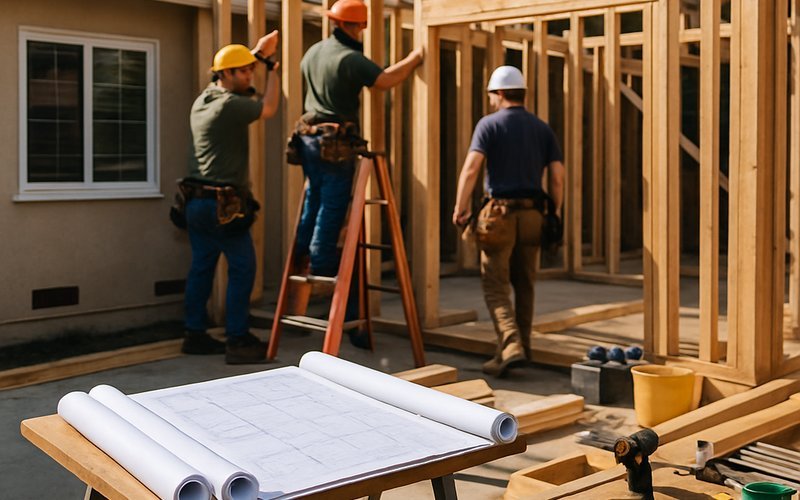
If you’re already thinking about an ADU or a room addition, combining it with a kitchen remodel is one of the smartest financial moves you can make as a Palo Alto homeowner. Bundling work saves on permit fees, cuts labor mobilization costs, and means you’re only living through one construction disruption instead of two.
Permit fees are a good example. A standalone kitchen permit runs $500–$2,200. A room addition permit runs $2,500–$6,000+. When scoped together, the combined permit is more efficient to process and often cheaper than two separate submissions. The same is true for trades: your plumber and electrician are already on-site, already familiar with your home’s systems, and already mobilized.
A homeowner in Midtown combined a full kitchen remodel with a 320 sq ft room addition in 2024. Running them as a single project saved roughly $12,000–$18,000 compared to the contractor’s estimate for two separate scopes. The kitchen alone would have taken 14 weeks. The combined project finished in 22 weeks, a much better outcome than 14 weeks plus another 18-week project the following year.
If an ADU is part of your longer-term thinking, it’s worth reading about ADU costs and permits in Palo Alto before you finalize your kitchen scope. The planning decisions overlap more than most homeowners expect. And if you’re curious how nearby contractors approach similar kitchen and addition bundles, King David Home Builders also handles kitchen remodeling projects in Santa Clara, which gives you a useful comparison point for scoping and pricing.
How to Choose the Right Kitchen Remodeling Contractor in Palo Alto
Choosing the right contractor in Palo Alto isn’t just about price. It’s about who can actually deliver in a tight labor market with complex older homes and a permit office that doesn’t forgive sloppy applications. Here’s what actually matters.
License and Permit History
Verify your contractor’s CSLB license at the California Contractors State License Board website. A valid Class B General Building Contractor license is the minimum. Ask specifically whether the contractor has pulled permits with the City of Palo Alto Development Services Center in the past 24 months. Local permit history matters because it means they know the plan checkers, they know the timelines, and they know what triggers revisions.
Subcontractor Transparency
Ask who does the electrical and plumbing work. Some general contractors use unlicensed subs on trade work to cut costs. That saves money upfront and creates massive problems at inspection. Get the names and license numbers of every trade sub before you sign.
Contract Structure
Fixed-price contracts protect you. Time-and-materials contracts protect the contractor. In a market where labor is tight and material prices shift, a time-and-materials agreement can blow your budget by 15–25% without anyone doing anything wrong. Push for a fixed-price contract with a clearly defined change order process.
Honestly, the lowest bid in Palo Alto is almost never the safe choice. When labor is constrained and material costs are high, a bid that’s 20–30% below competitors usually means someone is underestimating the scope or planning to find reasons to add change orders. The middle bid from a contractor with local permit history is almost always the better value. For more on what makes a great remodeling contractor in this market, this guide to choosing a home remodeling contractor in Palo Alto covers the vetting process in full detail.
Your kitchen is one of the highest-value rooms in your home, and in Palo Alto’s market, a well-executed remodel returns real equity. Don’t leave that to chance. Contact King David Home Builders for a detailed estimate on your Palo Alto kitchen project and get a scope you can actually trust.